the sea around us



Exhibition opening
Duration
Artists
Curation
Curation of the film screenings
Text
Research
Architectural Design
What role does life at sea or a port play in the formation of a city and how does it affect the way it prospers- or falls into disarray- and how does it define, if at all, national borders?
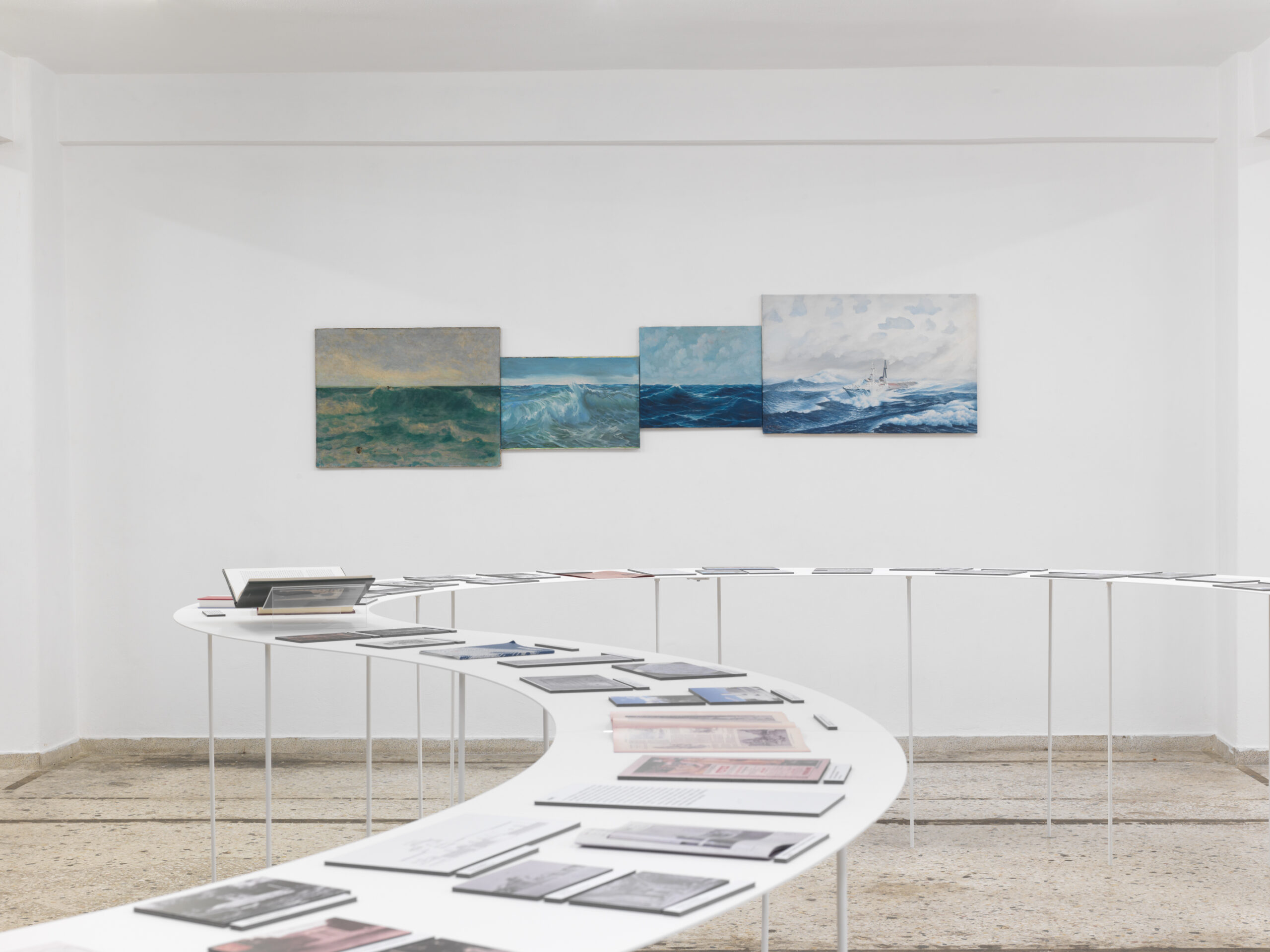
This Autumn at TAVROS, The Sea Around Us reflects, through three interconnecting chapters, on the ongoing relationship between human life and the sea: the sweat, toil and labor of the people that work in ports and on ships; ships as a paradigmatic heterotopia with their own rules and regulations; the changing conditions of ports over the last decades and the geopolitical impact of globalized trade routes; the cycle of life of ships and their ensuing environmental impact, and lastly, ports as sites of constant arrivals and departures, the repositories of so many dreams. Through archival material amassed via a two year research programme by the History and Theory Architecture Lab, moving images, sonic research, painting and photographic works by contemporary artists from Greece and abroad alongside a curated film programme, The Sea Around Us imagines the sea as a geography of its own, with various ports as entry points: starting from the Mediterranean and the Black Sea, the exhibition will travel us from the US, to Egypt, to Pakistan back to Greece and onwards encouraging us to ponder once more on the poetry of the sea and its everlasting allure whilst also emphasising that our relationship to the sea is an active one – can we care for our life-giving seas more?
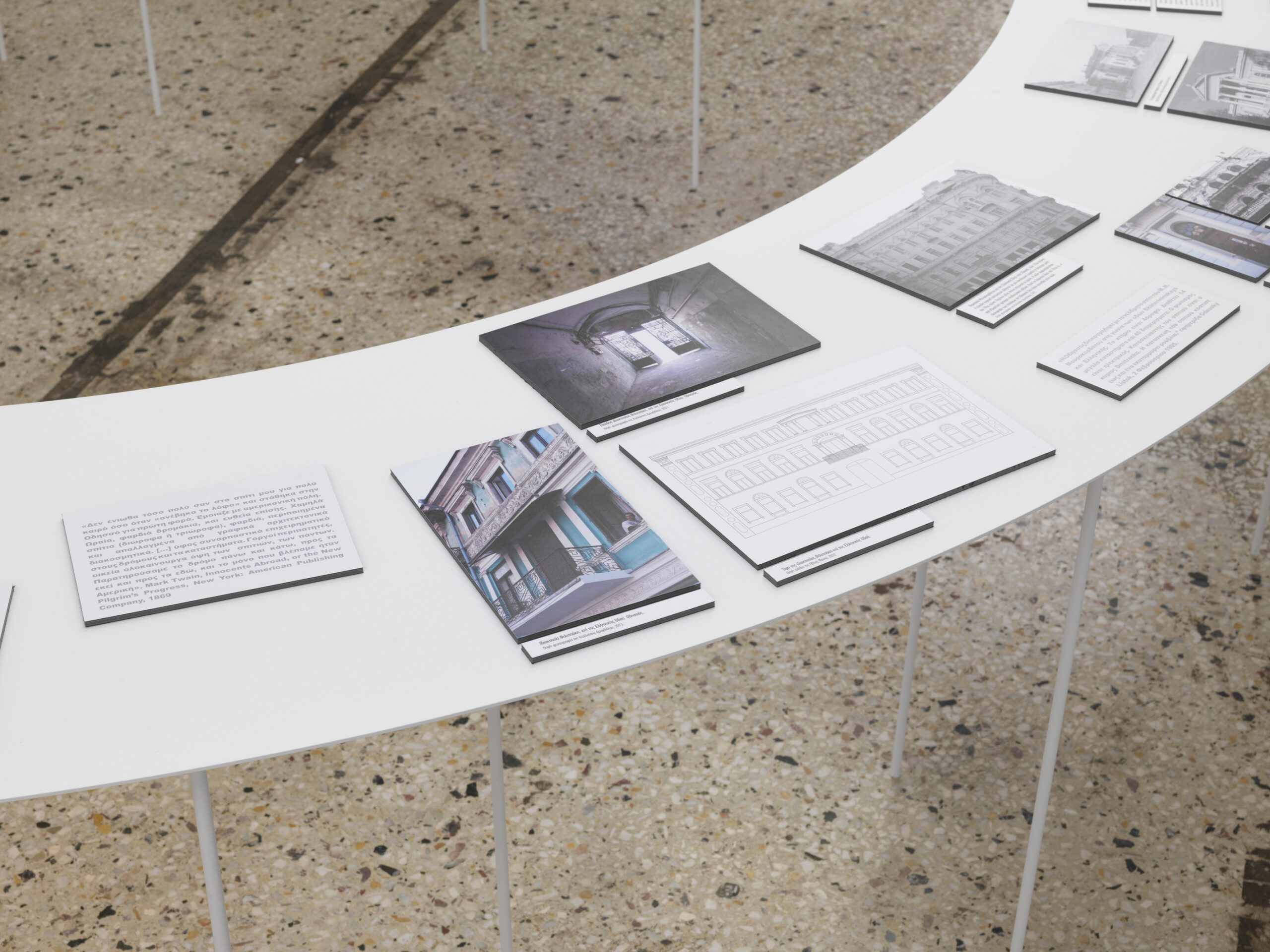
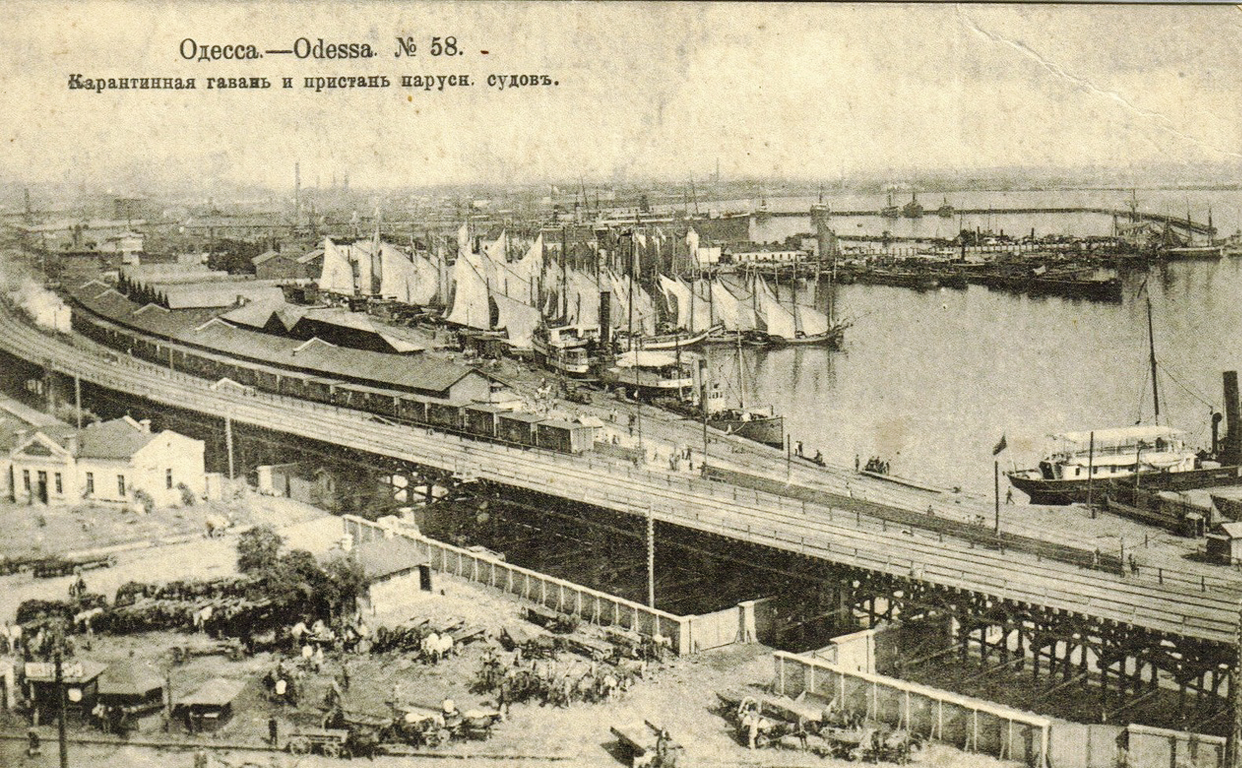
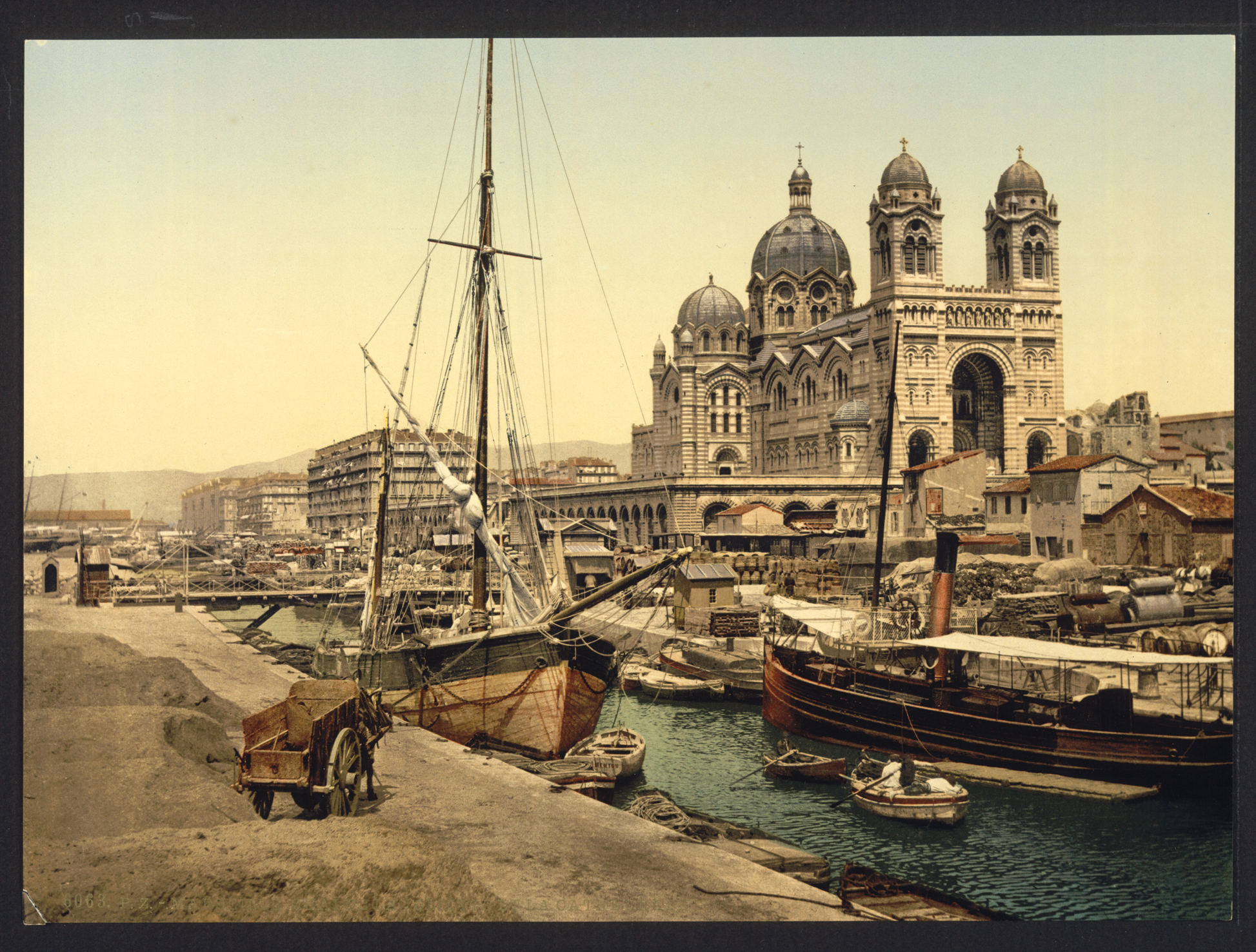
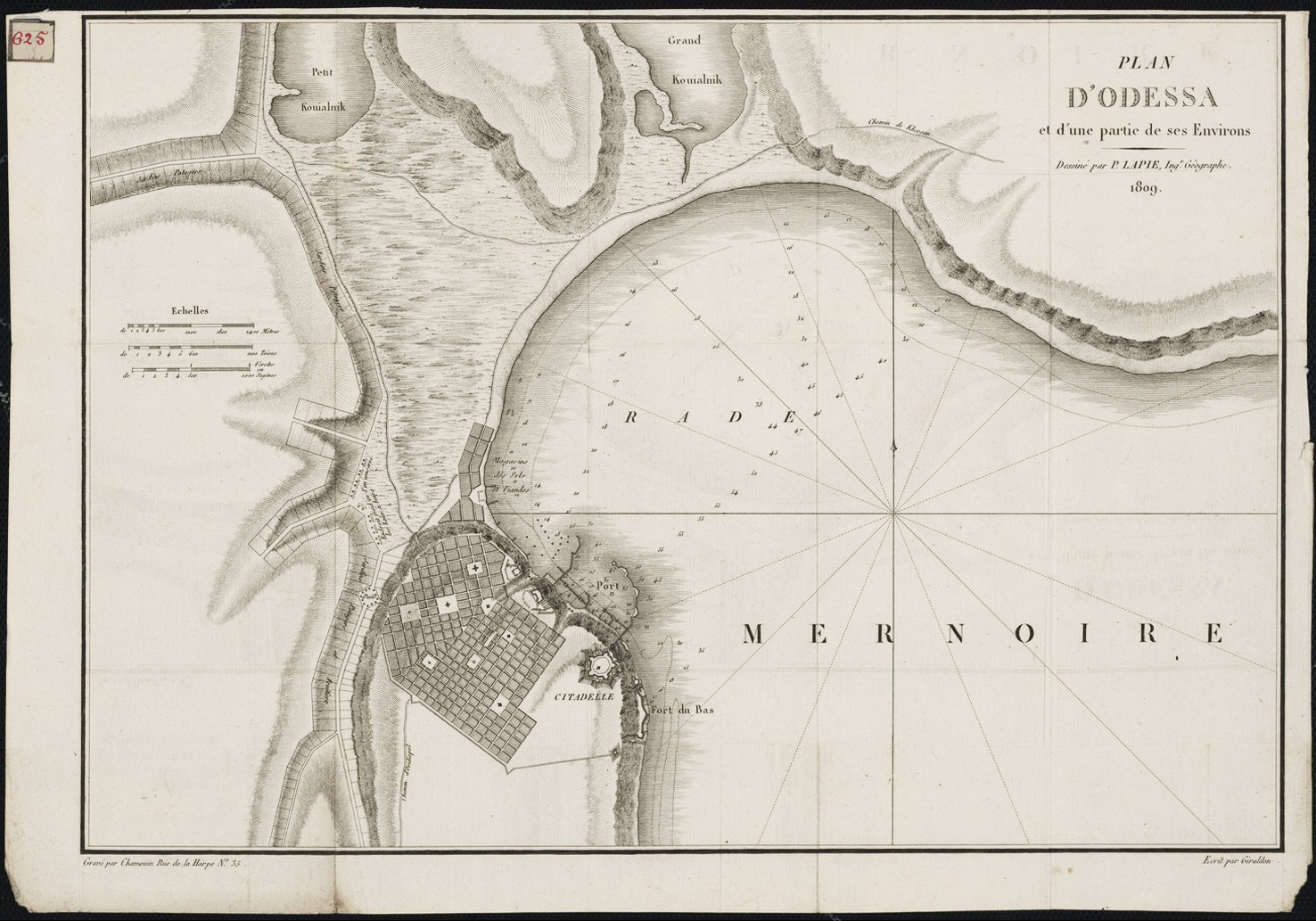
The Greek communities that flourished at port-cities around the Mediterranean and the Black Sea left behind them an important footprint, a ‘memory’ of their presence that was declared in the city through various emblematic works (temples,schools, community centers, monuments, sculptures of architectural scale, etc.). Through this spatial presence the communities expressed their strong social and economic position as well as their cultural identity and historical origin. Accordingly, the cities that hosted these communities often recognized their importance and their contribution to public life, and therefore honored them with public feasts, monuments, street names, etc. However, and despite all that has been written about these communities, their spatial footprint has been very little researched. The ODEMARS research project (odemars.ntua.gr) aims to highlight the ‘memory’ of these communities and the ways in which the architectural production of the 19th and 20th centuries co-shaped and co-signified their geographical origin as their cultural identity.
The research, like the current exhibition, focuses on two of the most important cities of the Greek diaspora: Odessa, a city founded in 1794 by Catherine the Great as a ‘Greek’ city, and Marseille, the oldest city in France, founded by the Phocaeans in the 6th century BC. Focusing on Marseilles and Odessa, two port cities in an opposite geographical position with respect to the ‘homeland’, and bringing to the surface architectural projects and other constructions carried out during the two previous centuries at the initiative of either the Greek communities or the local authorities, the research aims at contributing to a more precise mapping of a dynamic network whose nodes are the different cities, histories, memories, identities and architectures in constant reference to the same homeland. At a time when new violent alterations of borders, revisions of what ‘homeland’ means, and mass displacements of populations are being witnessed on more or less the same areas and roads, the preservation of memory as a genealogical relation to a, more or less, distant past seems like a necessary function. The construction of the homeland in another place —and its actual footprint in urban space— is the beginning of every new articulation of persons and communities.
The sea, off which port-cities like Marseille and Odessa with longstanding Greek communities thrive; the sea, that connects countries far and close; the sea, as a basic livelihood of Greeks throughout the centuries; the sea, as a repository of individual and collective memories and desires.
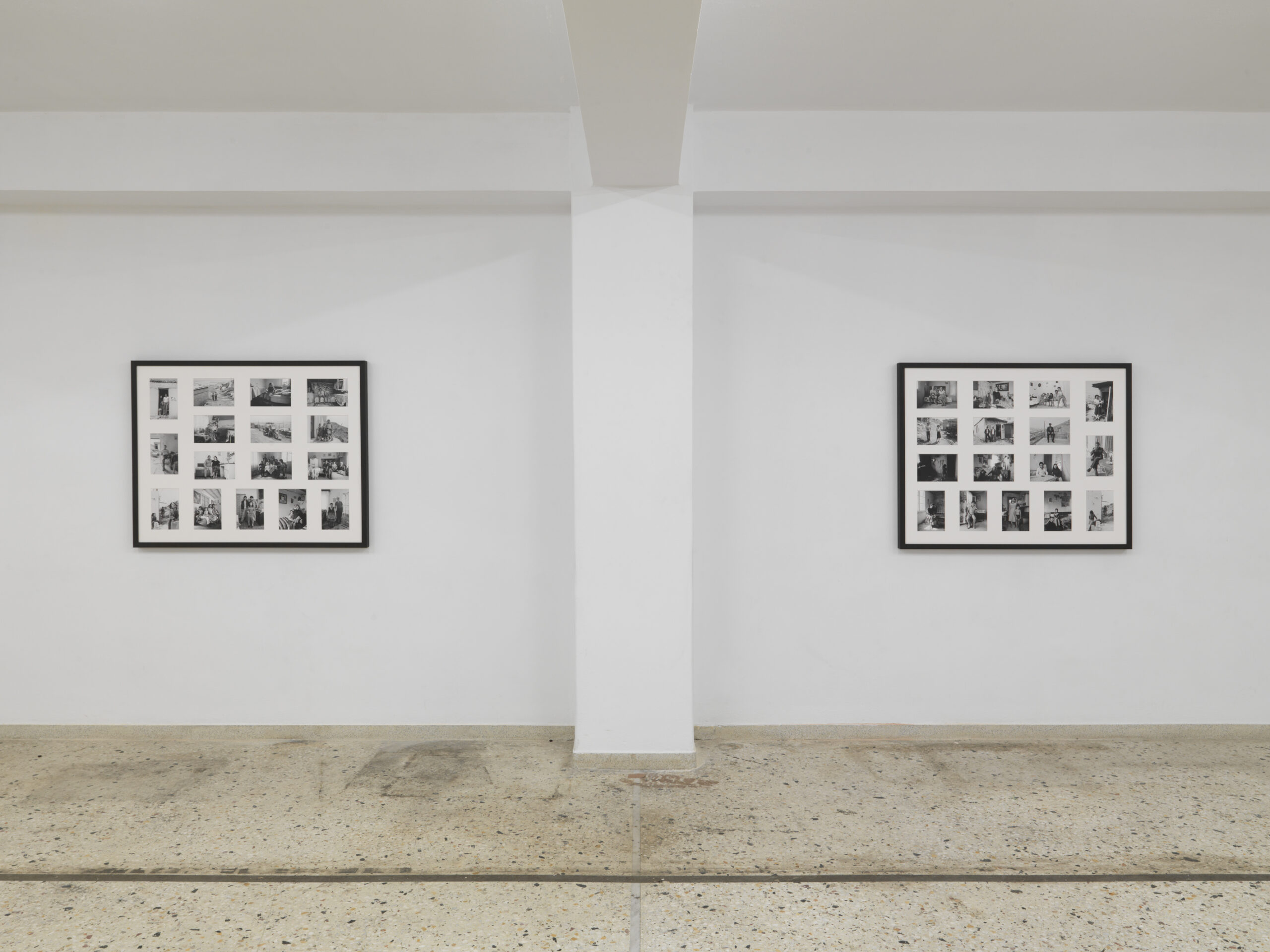
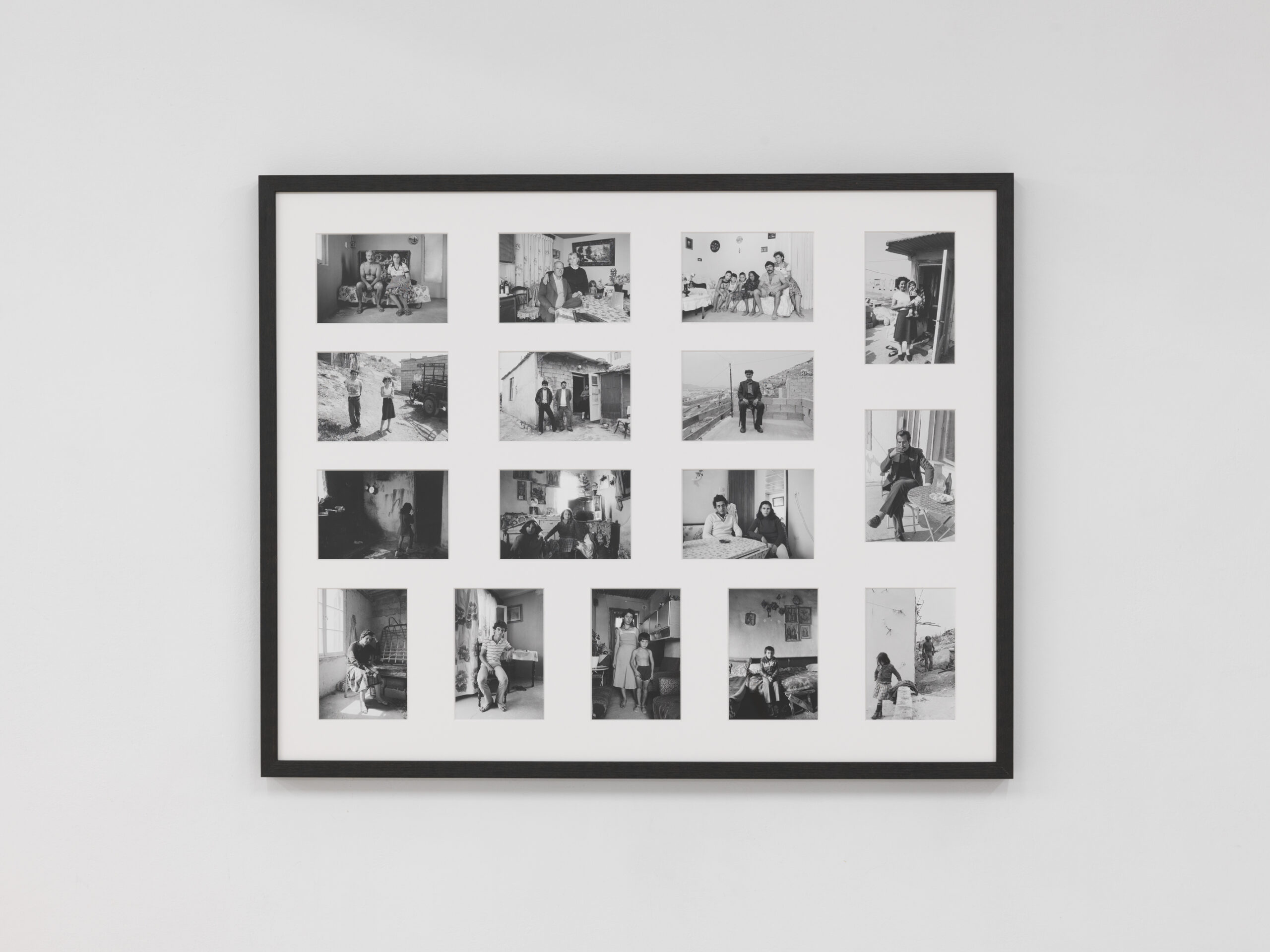
The sea that reminds us of our common beginnings, but which also divides and separates us. Just like the members of the families of sea-workers which had to make do without seeing each other for long stretches of time, sometimes leading even to the loss of loved ones, as photographer Nikos Markou systematically documented between 1980-1982 in these stoic black and white portraits. Frames of the lives of residents in Perama (a neighborhood adjacent to the Athenian port of Piraeus) indelibly linked to the sea and its toil.
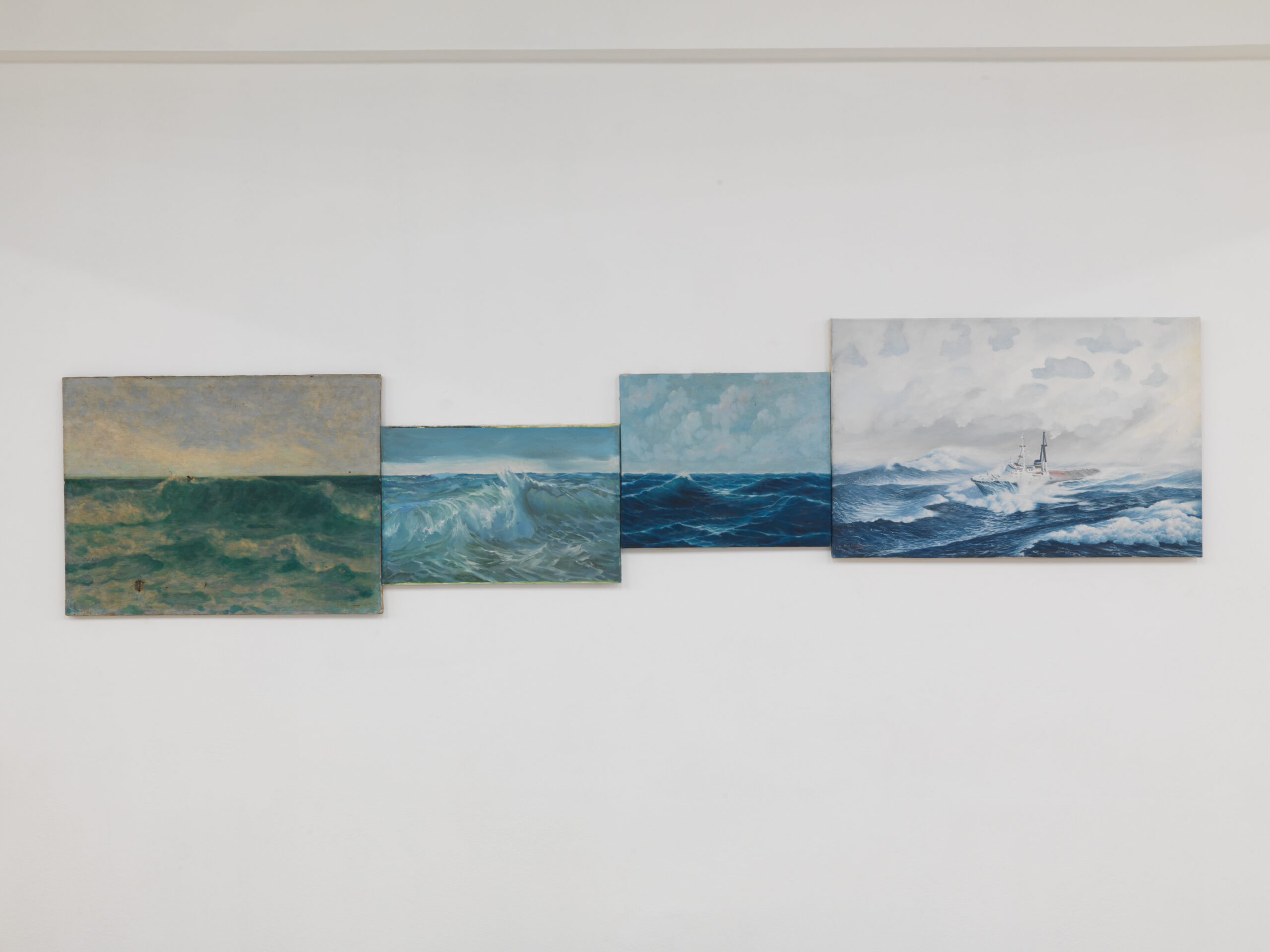
Artist Eftihis Patsourakis meanwhile looks at the sea face on in Horizon. Paintings of seascapes by amateur painters found in flea-markets are linked by Patsourakis, together to form a unifying horizon line, allowing us to reflect on the complexities of popular and elite cultures, past and present: that which unites and divides.
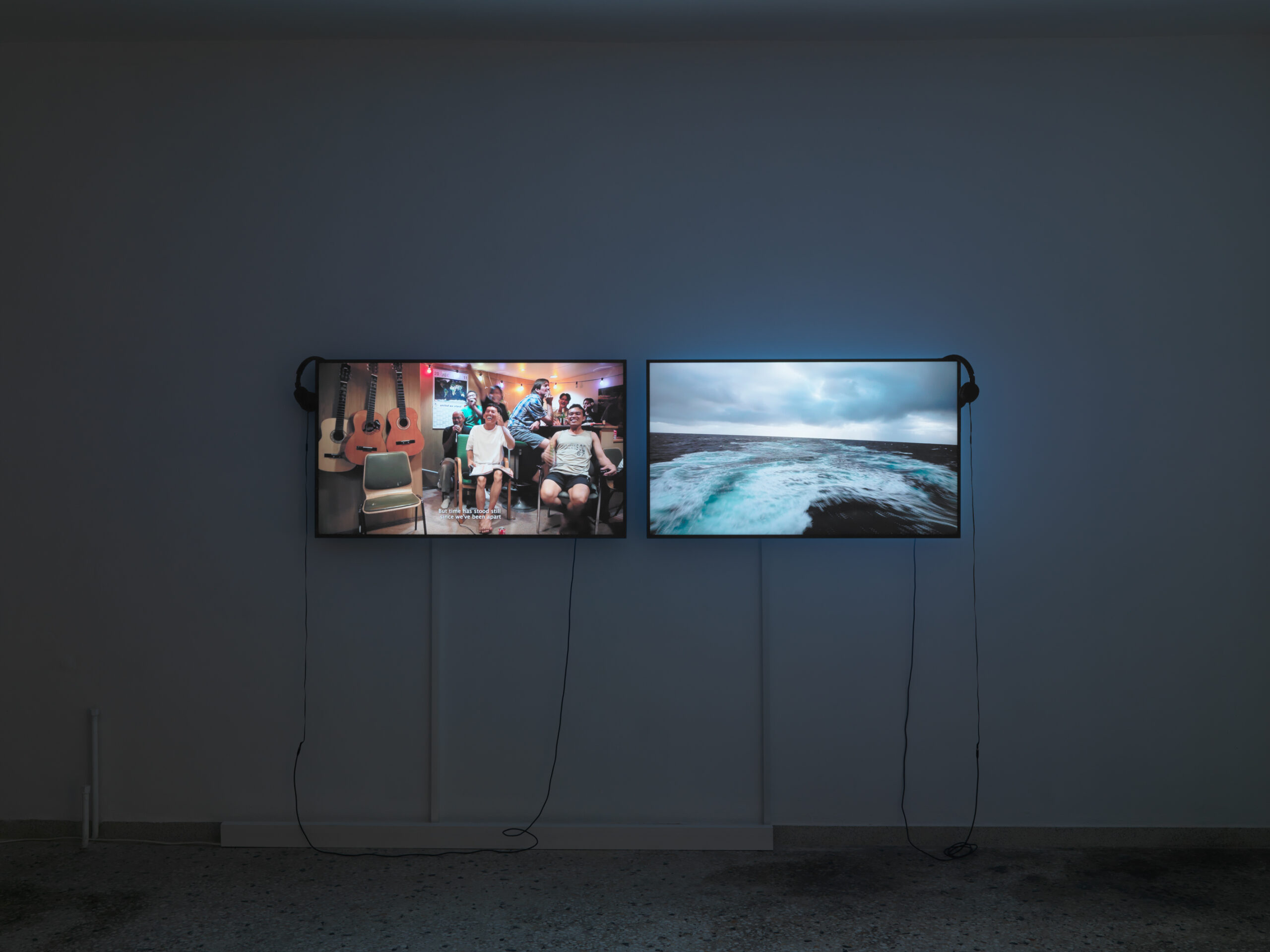
Cue in the Filipino workers in Lena-Maria Thüring’s film Ηanjin-Palermo, who in contrast to their German colleagues work on board for ten months in a row with no holidays and time ‘off shore’, with no health insurance for the remainder of the two back home. We get to see how they spend their downtime on board, in the ship’s bar, with its karaoke and drinks, as their only entertainment – singing pop songs as a unifying class defying score. The sea elusively carries in its waters dreams and hopes but oftentimes relentlessly wipes those same dreams out, revealing clear-cut ethnic and class divides.
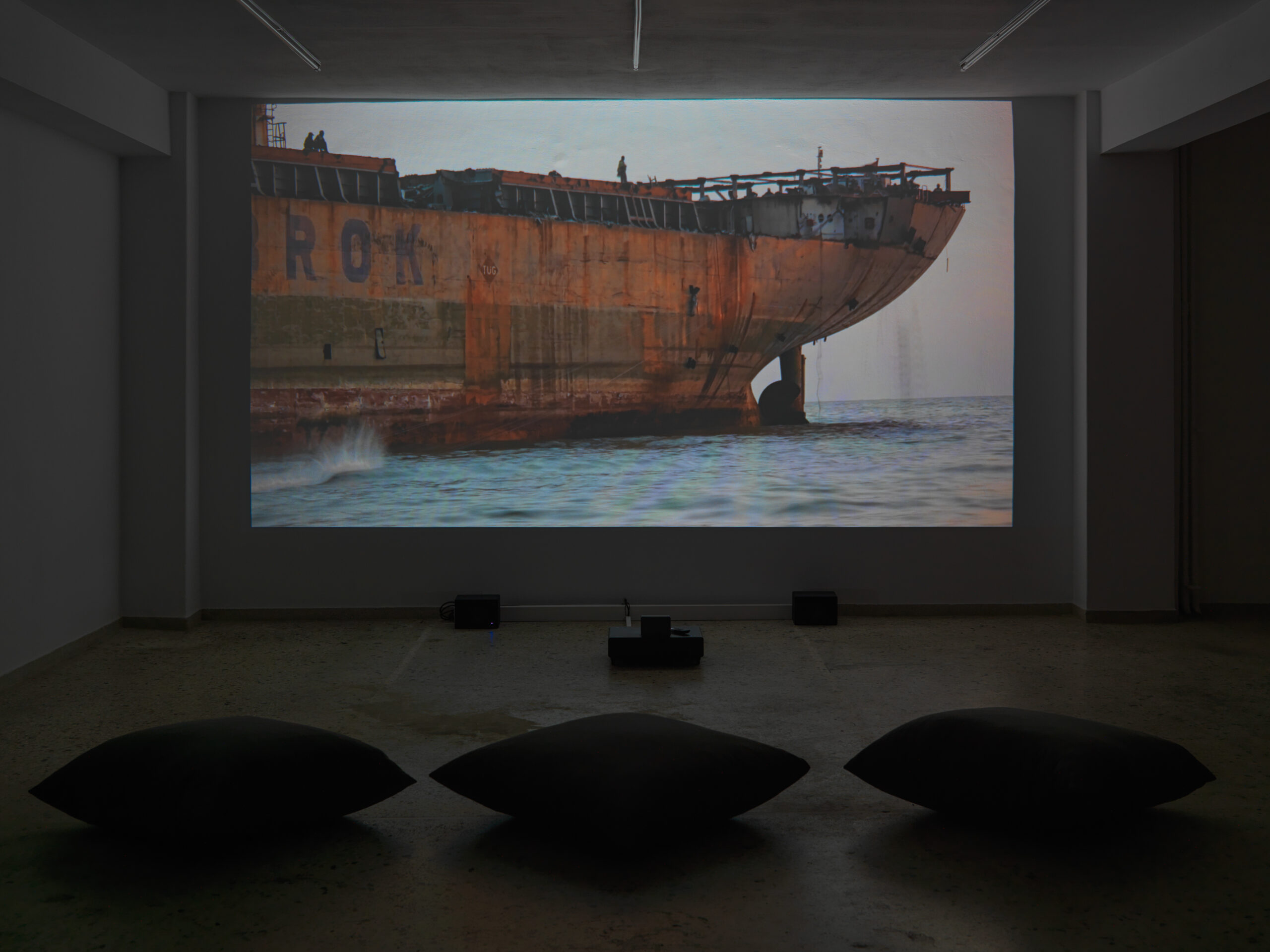
And then the cycle of ships themselves in the docu-fiction film by Hira Nabi. In All That Perishes At The Edge Of Land, an anthropomorphised container-ship with a human voice embarks on a monologue with the workers on board. Through its guttural, soothing voice, we learn of the unrelenting day-to-day existence of the workers who flock from every corner of Pakistan to the coastal town of Gadani and its shipyards, to earn a living by dismantling the de-commissioned ship. Here too there is no room for romanticism. Some will never return to the families they left behind.
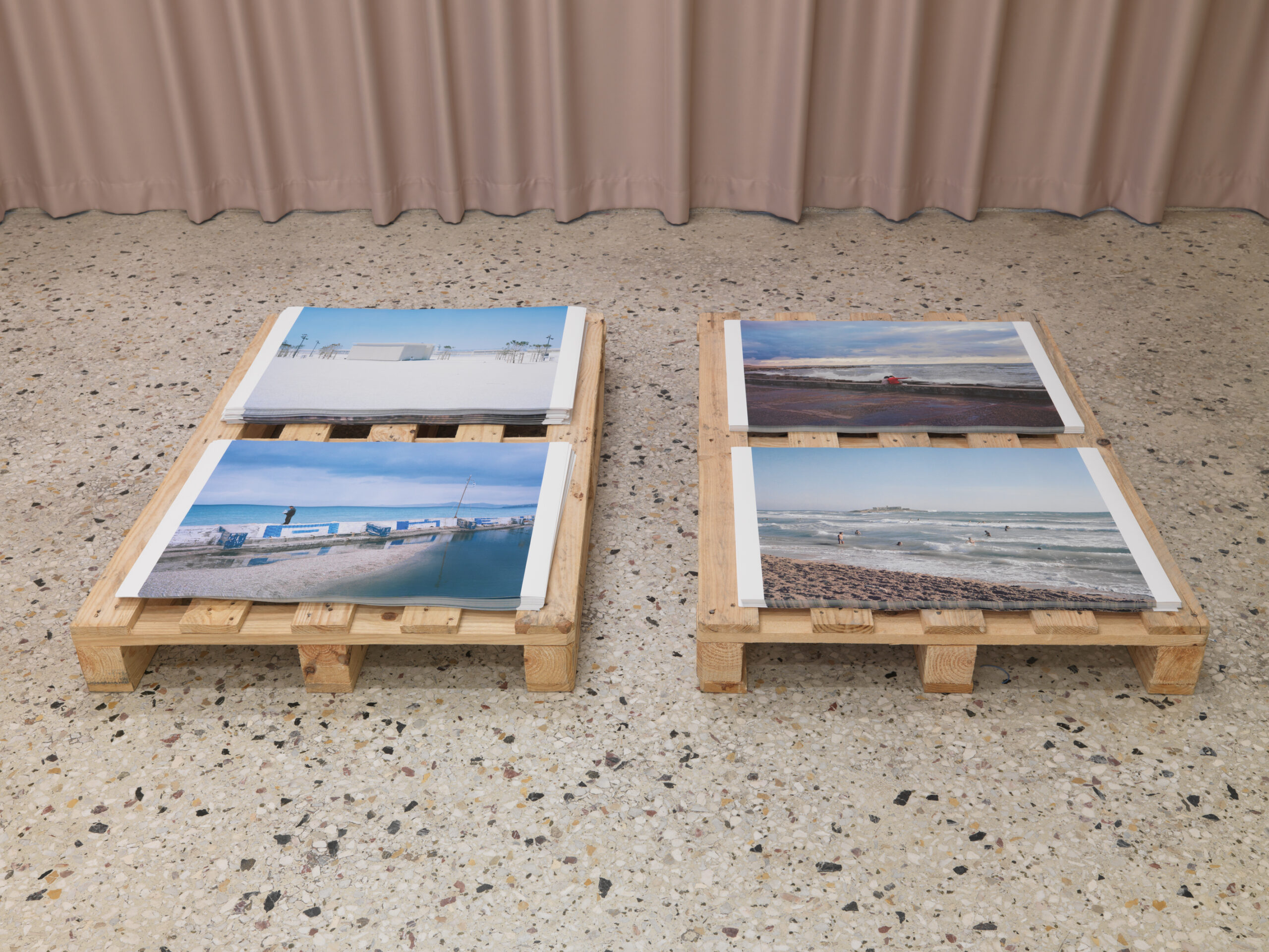
In Georges Salameh’s White Middle Sea, (البحر الأبيض المتوسط) whose title comes from the Arabic word for the Mediterranean), one ponders what his subjects may be thinking. Solitary figures caught praying and fishing in ports, Marseille, Athens, youngsters playing in the sea in Sicily, a couple looking outwards into the unknown in Alexandria. Salameh’s wistful documentation of the human is equally about their geography, the sea, seen and unseen: the landscapes of these port-cities that span the Mediterranean basin, the places to which he travels between and yes somehow belongs, the forced and unforced migrations, the decline of once global trading ports, the regeneration, the labour, the hopes and tears.
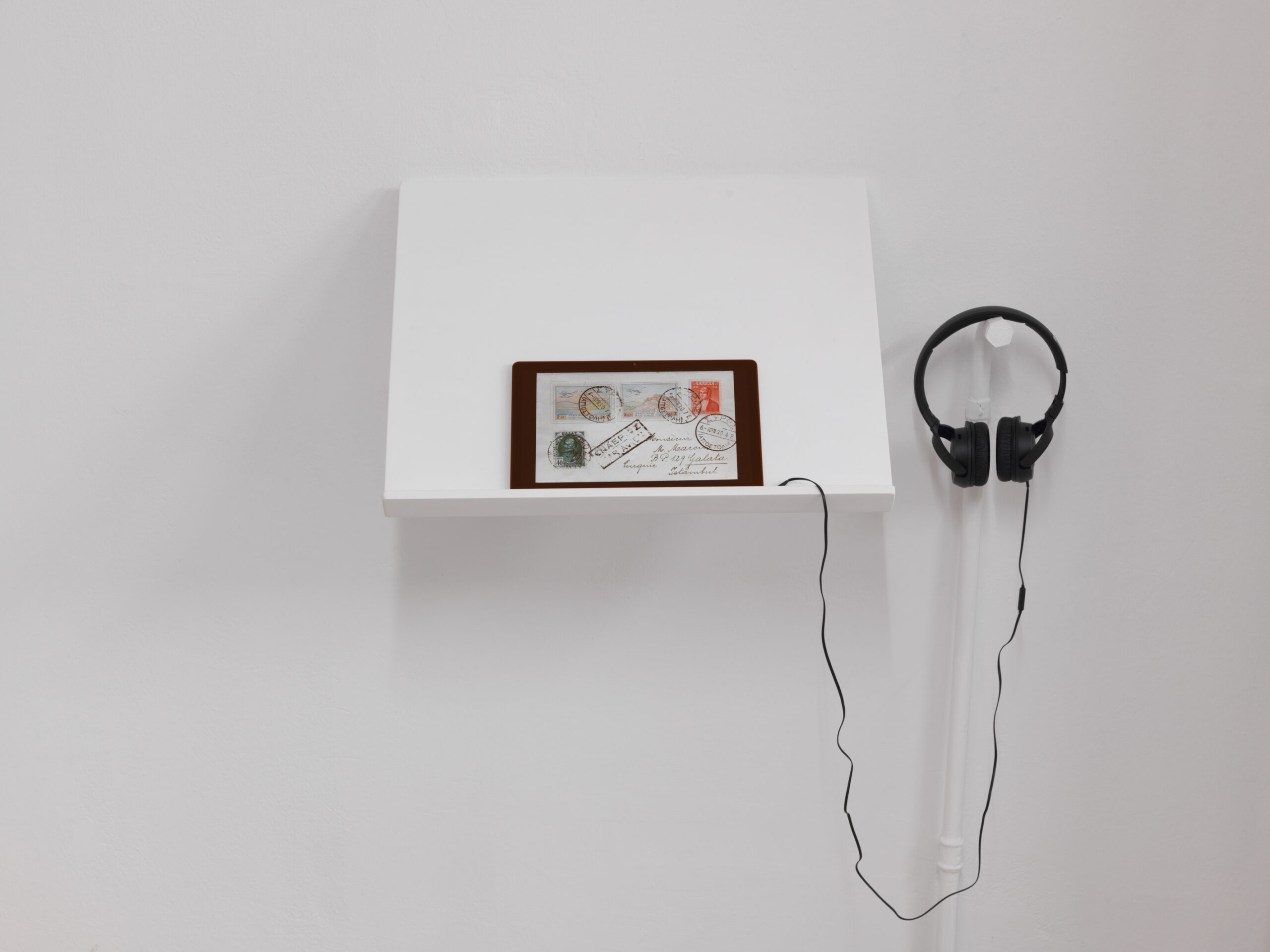
In turn Jacob Moe’s Ports of Call provide a latent soundscape for the exhibition, with familiar island sounds and songs that span the Aegean, offering an alternative timeline, one not based solely in geographic localities but itinerant movement echoing from one place to another.
The sounds of the Sea that is *all* around us.
PUBLIC PROGRAMME
Wednesday, 26 October 2022, 20:30 | Film screening
Screening:
Exotica, Erotica Etc, Evangelia Kranioti, France, 2015, 73 minutes.
The sea in Exotica, Erotica, Etc. (2015, France) is revealed as a topos of fantasies and desires, as a backdrop for unbearable longings expressed through meditative internal monologues and accompanied by imagery of breath-taking beauty.
Wednesday, 02 November 2022, 20:30 | Film screening
Screening:
Leviathan, Lucien Castaing-Taylor, Verena Paravel, UK-USA, 2012, 87 minutes.
An unforgettable visual experience, Leviathan (2012, UK-USA) is an immersive record of contemporary industrialized fishing.
Thursday, 08 November 2022, 19:00 | Discussion
Return to Odessa
Speakers: Iannis Carras (associate professor at the University of Macedonia), Maria Karavia (journalist and historian)
Iannis Carras will talk about the spatial organisation of the Philike Etaireia and the secret networks of Odessa prior to the Greek Revolution. Maria Karavia will talk about her experience of the Greek communities of Odessa.
Wednesday, 23 November 2022, 20:30 | Film screening
Screening:
Fish Tail, Joaquim Pinto, Nuno Leonel, Portugal, 2015, 103 minutes.
The questions of industrialization and globalization are also approached in a deeply poetic and reflective film, Fish Tail (2015, Portugal) that takes us to an island community and a way of life that is fast disappearing around the world.
Wednesday, 14 December 2022, 20:30 | Film screening
Screening:
Scales, Shahad Ameen, UAE-Iraq-Saudi Arabia, 2019, 74 minutes.
Between myth and legend, songs and hypnotic music, Scales (2019, UAE-Iraq-Saudi Arabia), invites the audience into a dystopic world in which the survival of women in a remote village is inextricably linked to the sea.
Wednesday, 18 January 2023, 19:00 | Discussion
Technogeographies of Wooden Boatbuilding: Syros
Speakers: Iris Lykourioti (architect, associate professor University of Thessaly), Jacob Moe (director, Archipelago Network)
Drawing on transcribed interviews, diagrams, photographs and other archived media from traditional boatyards on Syros, Iris Lykourioti and Jacob Moe discuss wooden boatbuilding as a system of material knowledge both technical and artistic in nature, linked with an expansive network of maritime and mainland regions.
Wednesday, 18 January 2023, 20:30 | Film screening
Screening:
Kalymnos directed by Basil N.Maros, Greece, 1963, 20 minutes.
Describing an activity that has thrived in the Mediterranean basin since antiquity, Kalymnos captures the daily life of the inhabitants of an island in the Dodecanese in the 1960s. Between festivities and music, we witness their struggles to earn a living whilst risking their lives as they dive for sponges into the depths of the sea.
Tuesday, 24 January 2023, 19:00 | Discussion
Construction of a Homeland
Presentation and launch of the ODEMARS’ team research on the port cities of Marseille and Odessa.
Wednesday, 25 January 2023, 20:30 | Film screening
Dark Waters, Youssef Chahine, Egypt, 1956, 104 minutes.
Meanwhile Dark Waters (1956, Egypt) offers an unusual gaze onto the port of Alexandria in the 1950s. The port is the setting for a passionate love story and the location of sailors’ struggles led by the then young actor Omar Sharif.
Educational programme
how far is the sea?
Facilitators: Natalia Bazaiou (Athens Superscript) and Vassilis Tzavaras (Gnous).
Participating schools: 2nd and 3rd primary schools of Tavros
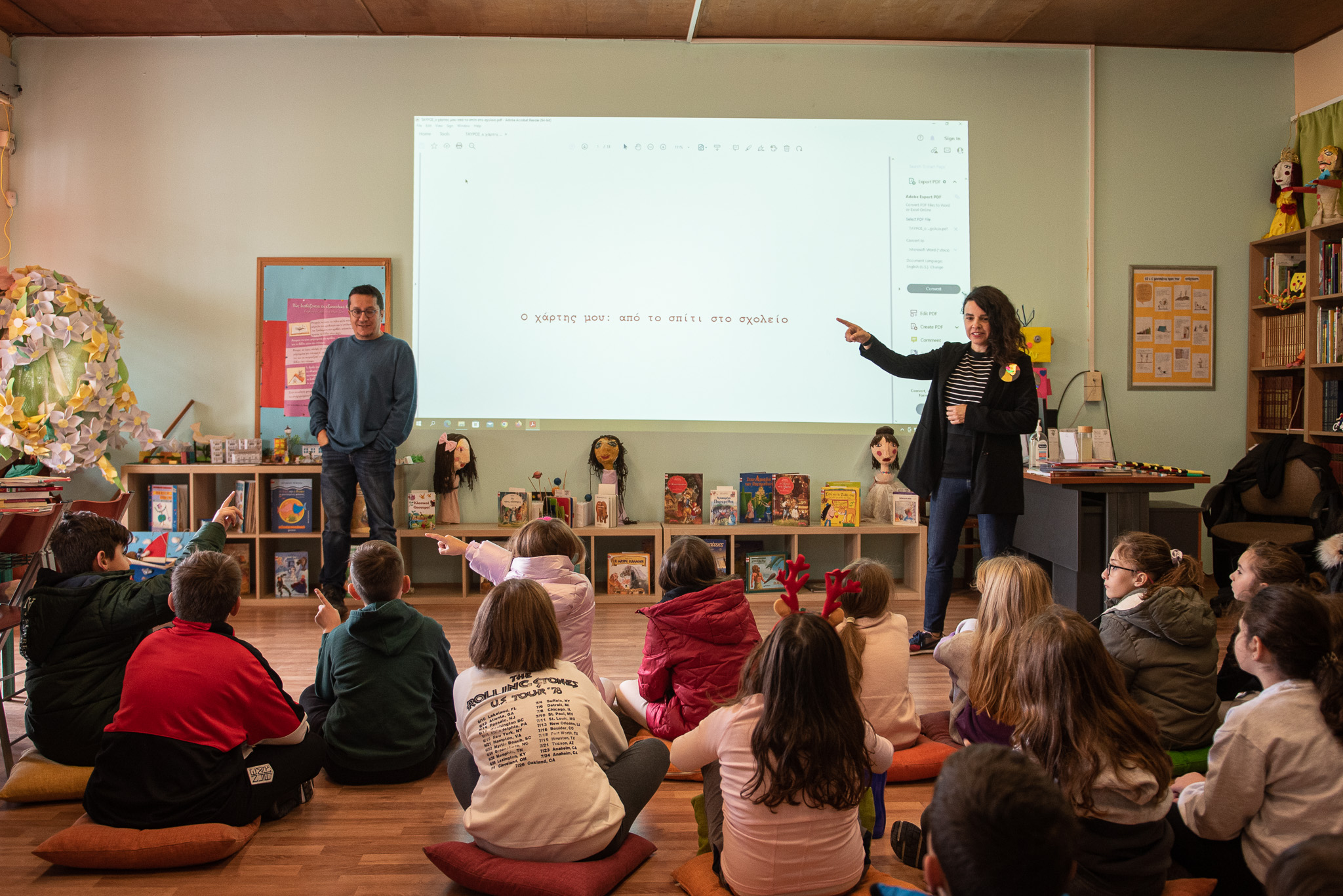
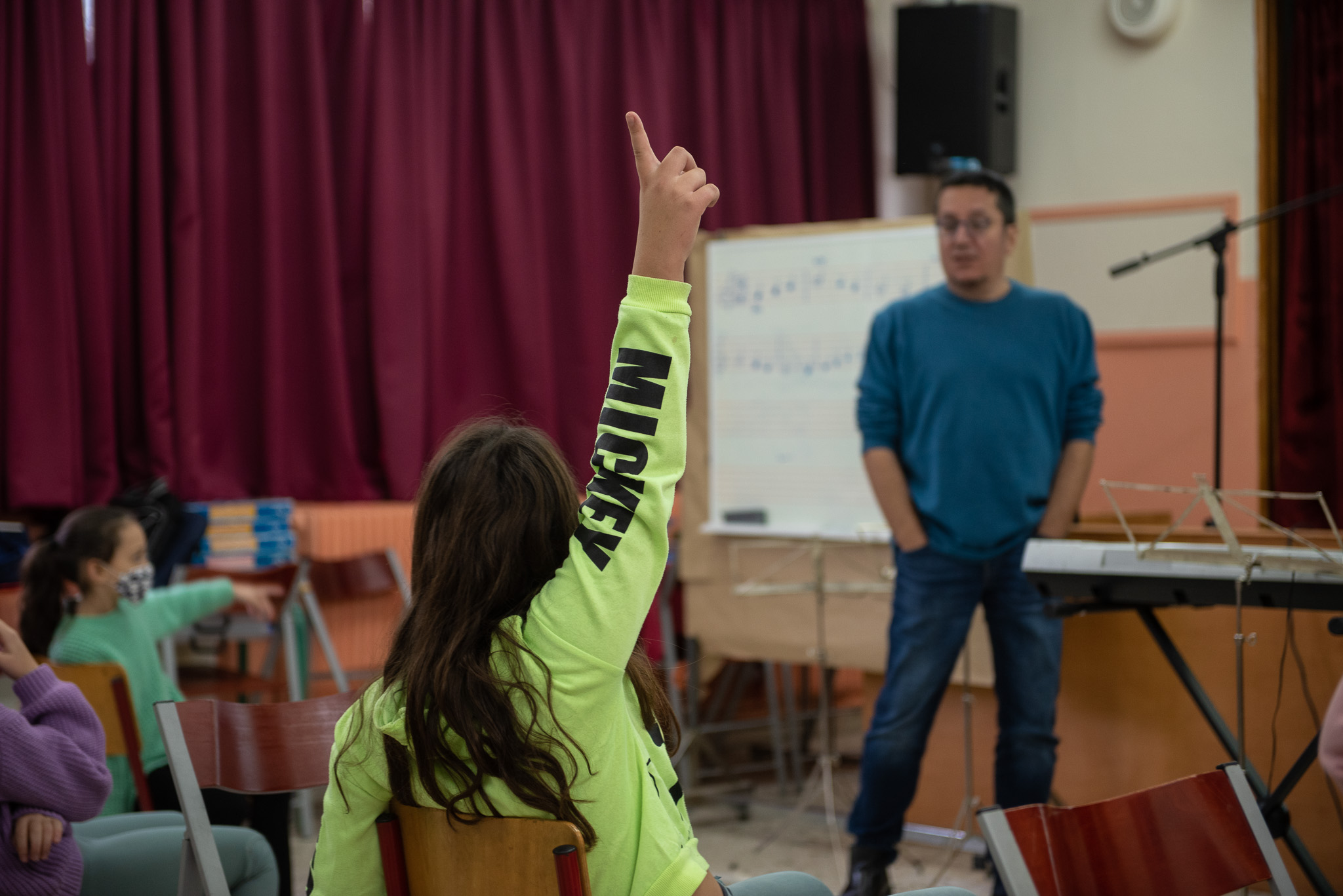
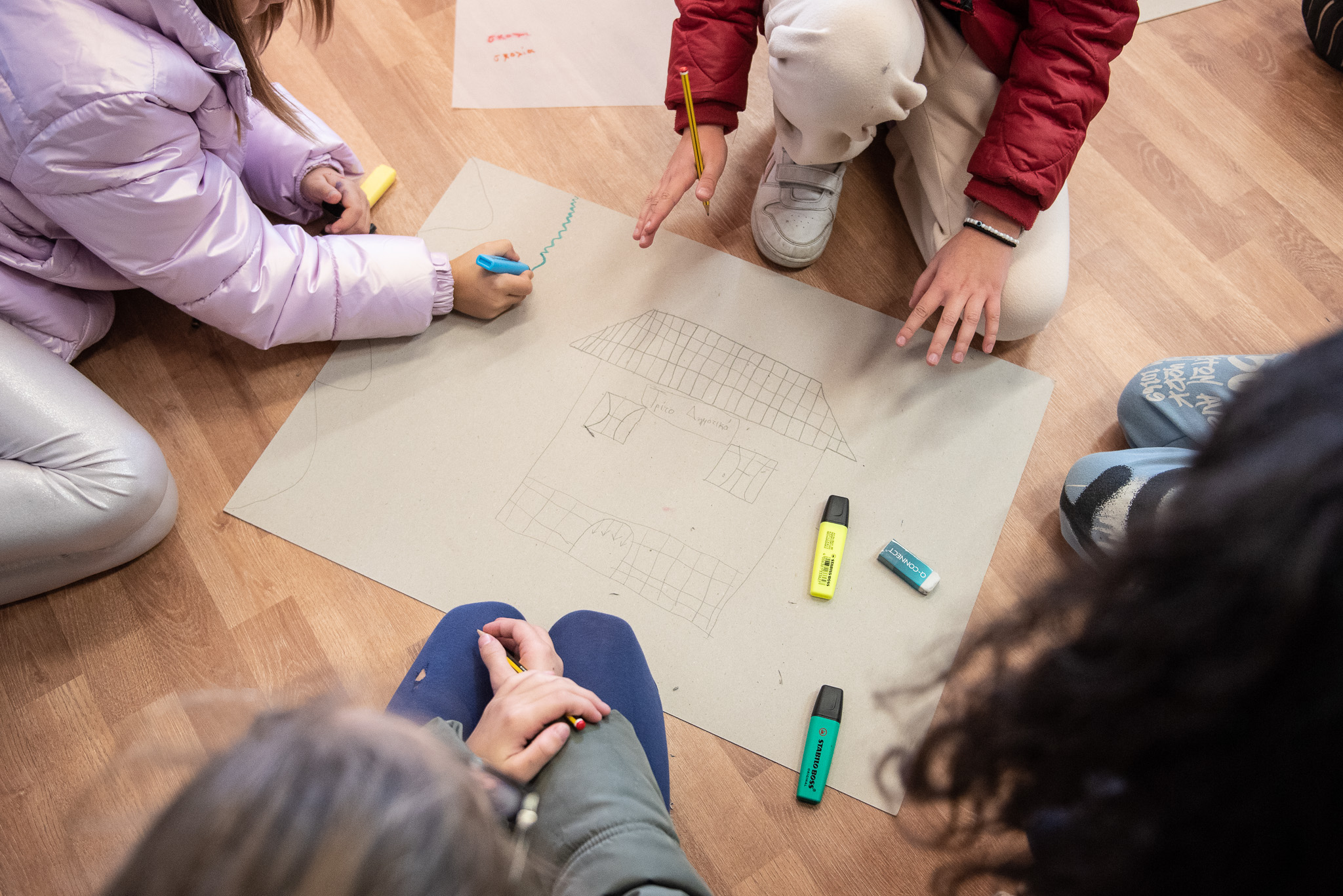
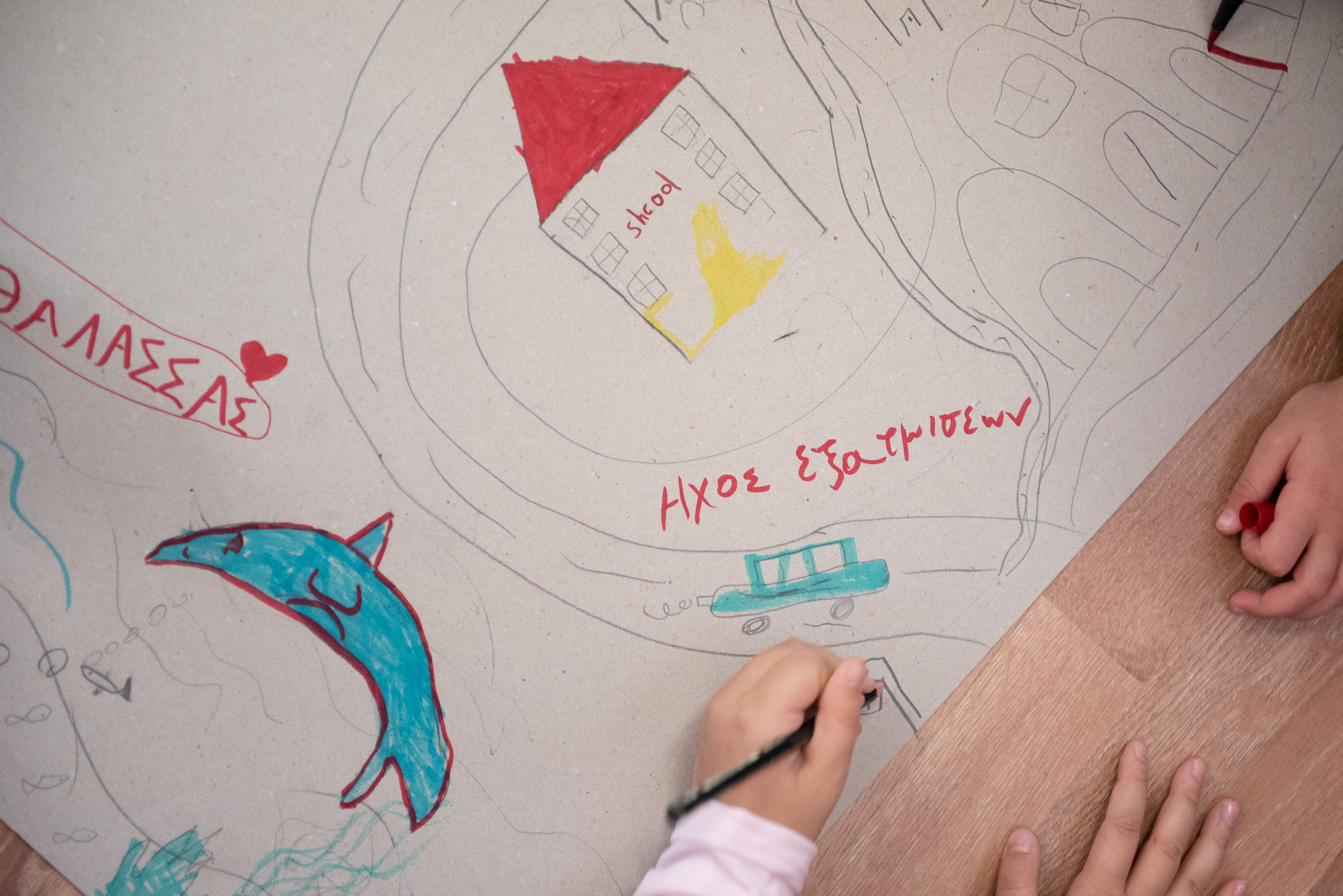
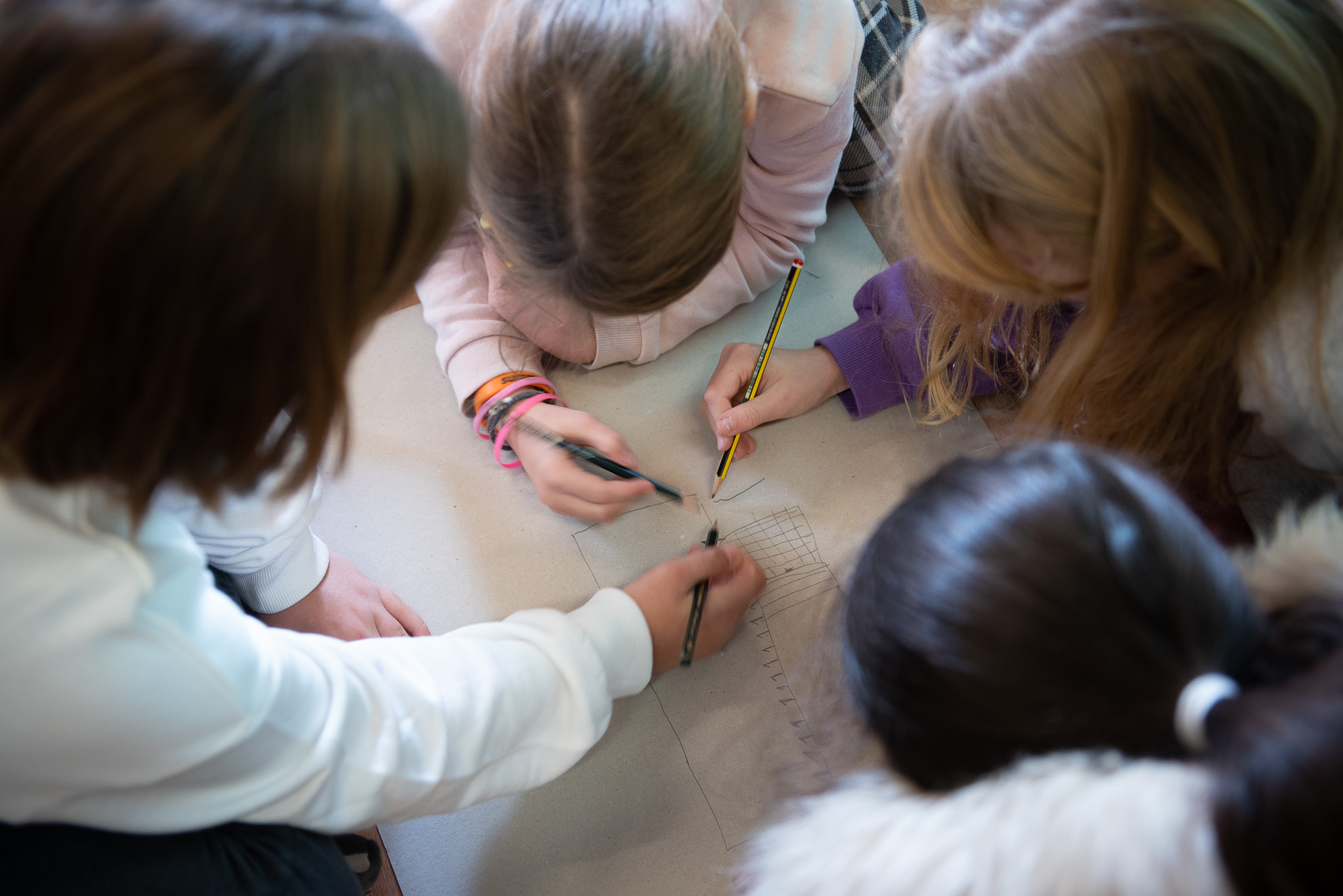
Through on-site recording, mental mapping and the visualisation of sounds, 4th grade students of the 2nd and 3rd primary schools of Tavros pathed a route via the architectural landscape and soundscapes of their neighbourhood, all the way down to the sea.
Over four sessions and using various sonic and visual tools they imagined the distance that separated their schools from the shore.
Support
Athina I. Martinou Foundation, Make or Break Foundation, Aikaterini Laskarides Foundation, Chios Navigation Ltd, Anthony E. Comninos Foundation, Byzantine Maritime, Hellenic Foundation for Research and Innovation, Kokotos Estate
& Ioanna Prokopiou