correspondences





Duration
Curation
Contributors
Alongside the film programs Unfortunately, it was paradise and Who knows what yesterday will bring?, the Correspondences created a framework that enabled study and discussion around the films. Maria-Thalia Carras and Delphine Leccas invited, filmmakers, artists, curators, and activists to reflect on the issues raised by the selected films. As a result, a series of texts, visual essays, and online discussions was produced.
correspondence 1
On the occasion of the 1st chapter of the program Unfortunately, It Was Paradise.
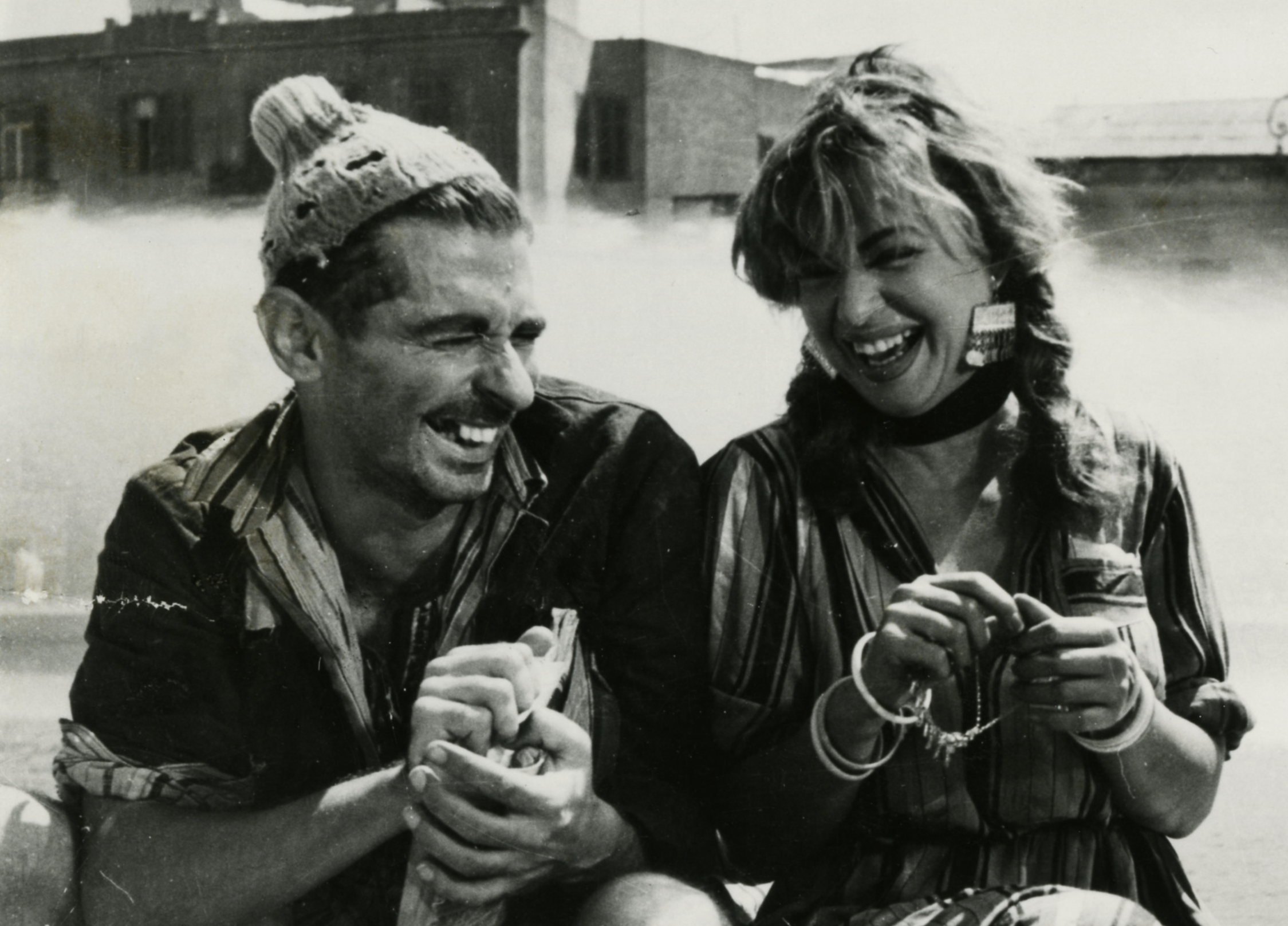
An online conversation about Cairo Station (Youssef Chahine, Egypt, 1958, 74 minutes) between two filmmakers, Jihan El Tahri and Tamer el Said.
See the conversation (27 minutes) that took place in Berlin:
ENG: https://vimeo.com/459550815
Greek subtitles: https://vimeo.com/464107752
Arabic subtitles: https://vimeo.com/466815147
correspondence 2
On the occasion of the 4th chapter of the program Unfortunately, It Was Paradise.
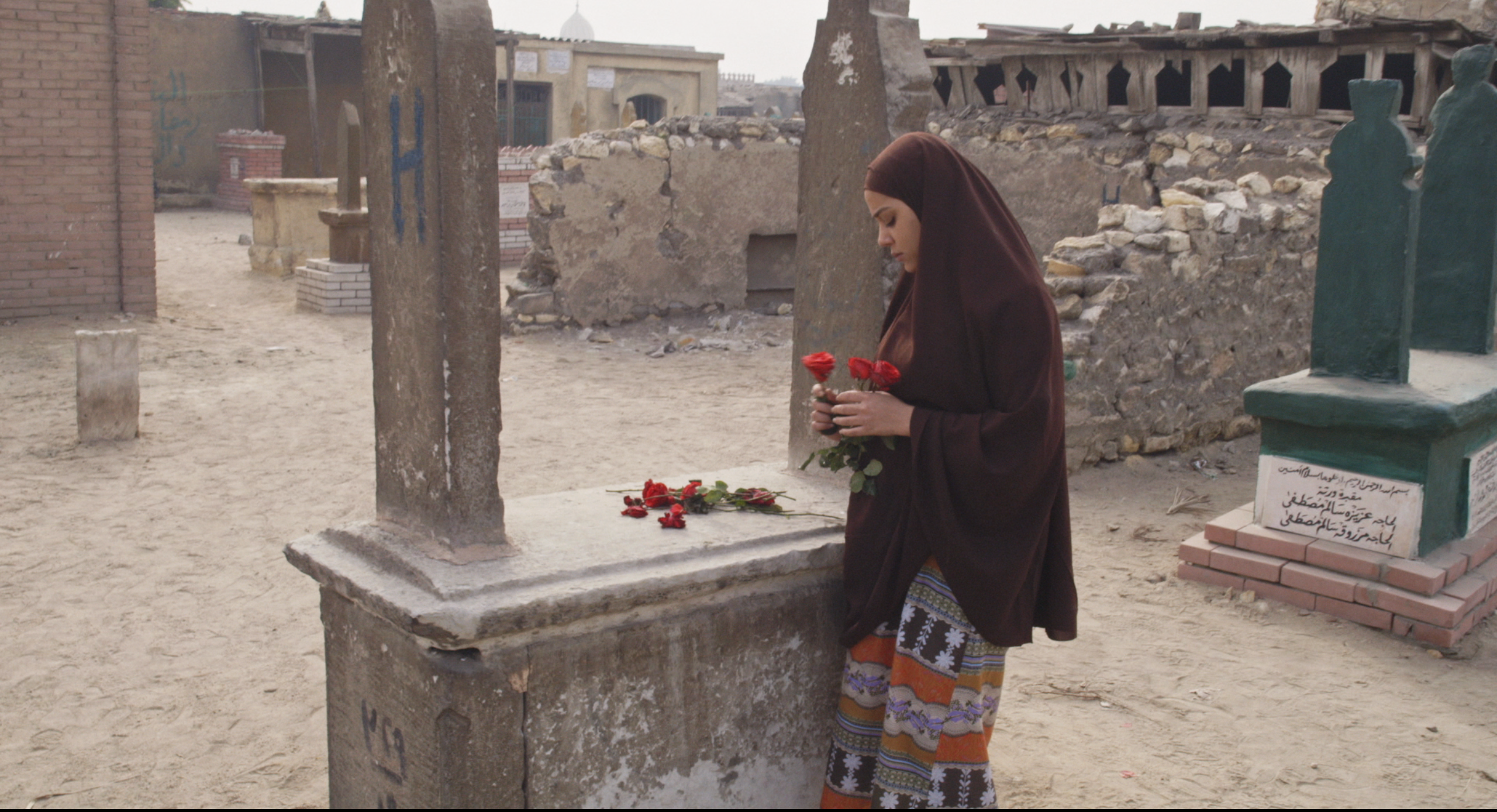
Two texts were written, one by playwright and screenwriter Efthimis Filippou and essay by writer and critic Ismail Fayed inspired by the films Until the Ship Sails (Alexis Damianos, Greece, 1966, 93 minutes) and Poisonous Roses (Ahmed Fawzi Saleh, Egypt/France/Qatar/United Arab Emirates, 2018, 70 minutes).
You can read Efthimis Filippou’s text in English here and in Arabic here.
You can read Ismail Fayed’s text in English Anywhere but here and in Arabic here.
correspondence 3
On the occasion of the 5th chapter of the program Unfortunately, It Was Paradise.
Two essays were written by scholar and filmmaker Argyro Nicolaou and art and film critic Nicolas Feodoroff inspired by Ceuta’s Gate (Randa Maroufi, France/Morocco, 2019, 19 minutes), Pre-Image (Blind as the Mother Tongue) (Hiwa K, Germany/Greece, 2017, 18 minutes) and The Longest Run (Marianna Economou, Greece, 2015, 74 minutes).
Read Argyro Nicolaou’s essay in English: My mother will die of sorrow: the cinema’s familiar tongues of displacement and in Arabic here.
Read Nicolas Feodoroff’s essay here and in Arabic here.
correspondence 4
On the occasion of the 6th chapter of the program Unfortunately, It Was Paradise.
Correspondence 4 was a series of four podcasts by curator, writer, researcher and performance artist Yasmina Reggad and a video by artist and architect Sofia Dona inspired by Plato’s Academy (Filippos Tsitos, Greece/Germany, 2009, 103 minutes) and My English Cousin (Karim Sayad, Switzerland/Qatar, 2019, 122 minutes).
Watch Sofia Dona’s film, Mountains Come first with English and Arabic subtitles.
MOUNTAINS COME FIRST (video / 34 minutes)
Sofia Dona
The Mediterranean is by definition a landlocked sea. But beyond this we must distinguish between the kinds of land that surround and confine it. It is, above all, a sea ringed by mountains. This outstanding fact and its many consequences have received too little attention in the past from historians. Fernand Braudel, The Mediterranean and the Mediterranean World in the Age of Philip II.
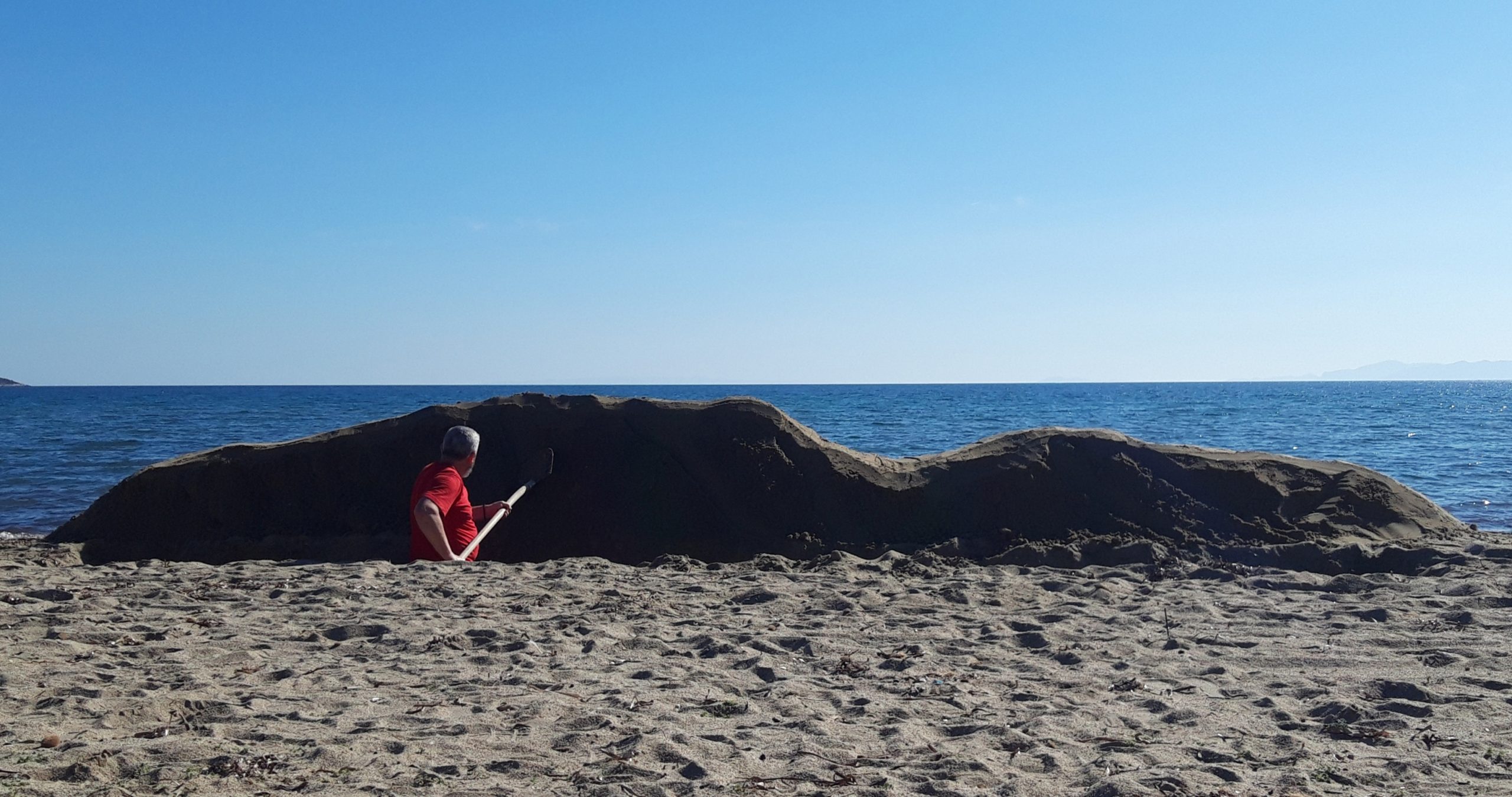
Juxhin Kapaj (Jorgo Prifti) uses a spade to dig, shoveling sand, arduously forming the shape of the mountain range that he passed in 1990 as he migrated from Albania to Greece. The rhythm of the spade digging alongside the sound of the waves on the beach creates a soft background noise covered only by Juxhin’s voice as he narrates his story: from Avlona (Albania), to the Ceraunian Mountains, onto Corfu and Athens. As he digs, he creates a ditch that functions like a negative of the mountain topography which slowly subsumes him the deeper he goes. The mountain formed by the dug-up sand looms over him and slowly even surpasses the horizon line. Meanwhile a lone rower passes by balancing on a surf board. Towards the end of the narrative, an extract of the Greek song from the eponymous film “This Night will last” in which Kapaj’s voice was used as stand in for an Albanian immigrant intercepts the film. The narration becomes more fragmented as Kapaj tries to recall his journey through the mountains, mentioning cities, rivers and the geological topography of the landscape he passes. As he sculpts the mountain range, peaks, crevices and gorges, he effectively reconstructs the landscape and history of his passage. The title of the work is borrowed from the chapter ‘Mountains Come First’ from Braudel’s “Mediterranean” where Braudel points out that less research has been carried out on mountains due to their lack of an agricultural economy. However the mountains that circumscribe the Mediterranean are the embodiment of the passages through, over time.
Watch Mountains Come first here: here
Listen to Yasmina Reggad’s podcasts Home Away Kit:
I. The Shit Life Syndrome (Script in English & Arabic.)
II. Working Class Heroes (Script in English & Arabic.)
III. Algerian Wedding (Script in English & Arabic.)
IV. & V. Life is Confusing at this Point (Script in English & Arabic.)
correspondence 5
On the occasion of the 7th chapter of the program Unfortunately, It Was Paradise.
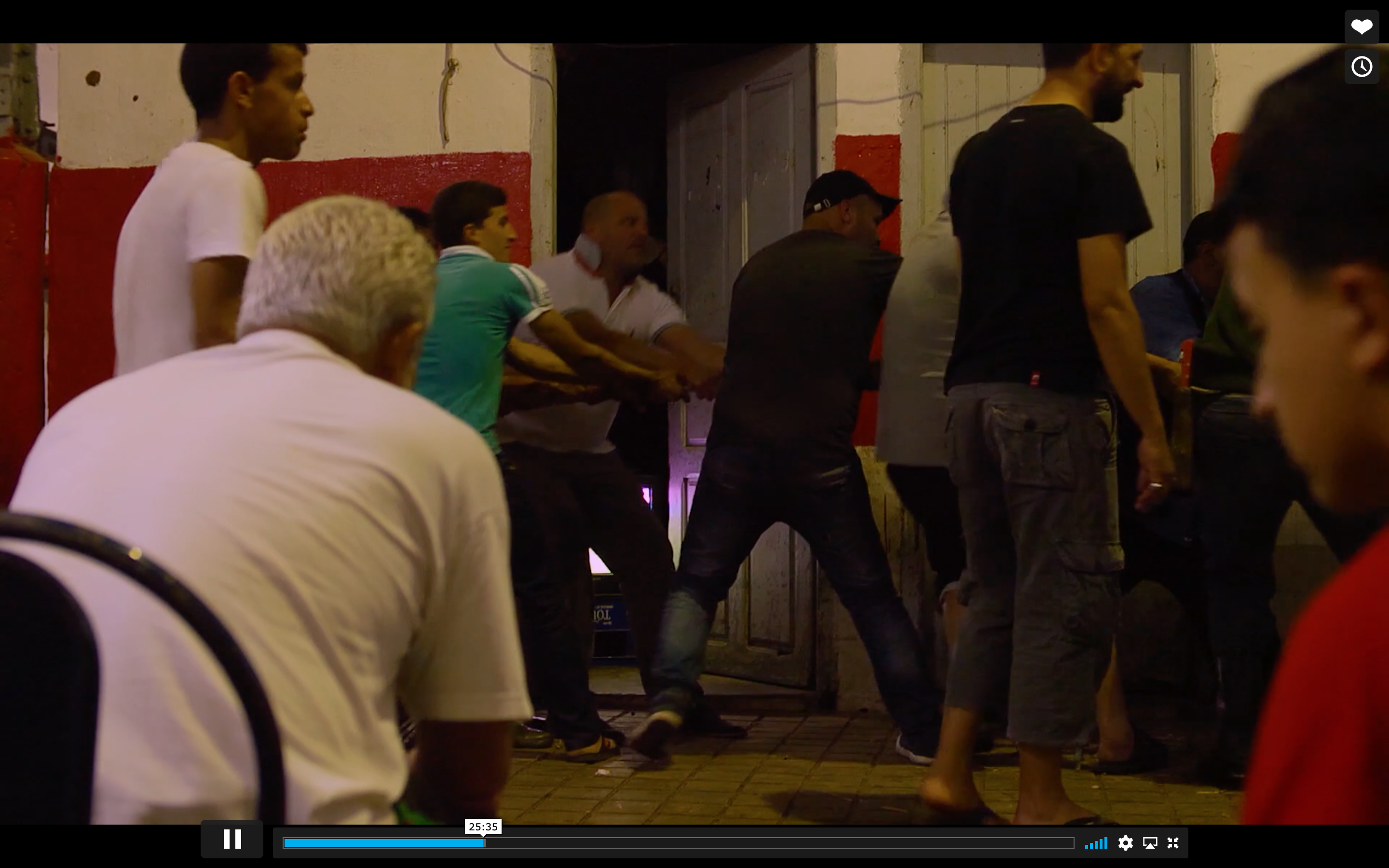
Two essays written by cultural journalist and essayist Ammar Almamoun and researcher and philosophy professor Sophia Efstathiou inspired by the films Roundabout in my Head (Hassen Ferhani, Algeria/France/Lebanon/Qatar, 2015, 101 minutes) and The Shepherds of Disorder (Nikos Papatakis, Greece, 1967, 121 minutes).
Read Ammar Almamoun’s essay The Violence of Political Power in the Face of the Freedom of Beasts and in Arabic.
Read Sophia Efstathiou’s essay Tavros – On Animal Resistance and in Arabic here.
correspondence 6
On the occasion of the 1st chapter of the program Who knows what yesterday will bring?
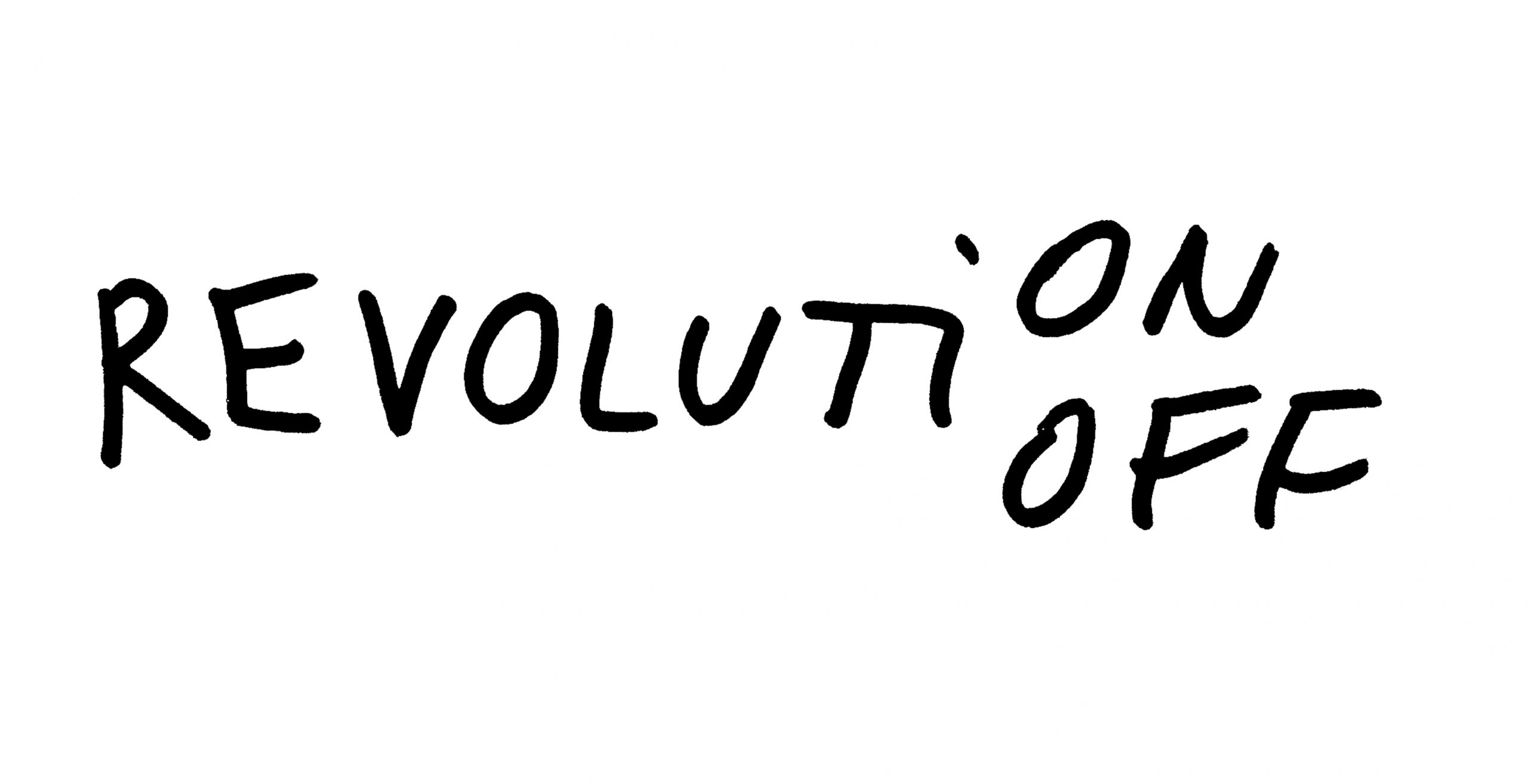
Correspondence 6 was a series of sketches by Romanian artist Dan Perjovschi commenting on The Rehearsal (Jules Dassin, Greece/ U.K., 1974, 92 minutes) and Videograms of a Revolution (Harun Farocki, Andrei Ujica, Germany, 1992, 106 minutes) . His drawings were distributed to the audience during the screenings.
correspondence 7
On the occasion of the 4th chapter of the program Who knows what yesterday will bring?
An essay about the movie Depth Two (Ognjen Glavonić, Serbia/France, 2016, 80 minutes) was written by Aleksandra Sekulić, film program curator at the Center for Cultural Decontamination (CZKD, Belgrade). Translated by Sofia Grigoriadou.
A Look From the Stage – Depth Two by Ognjen Glavonić
A cinematographic essay based on autobiographical memories and historical contents around the work of the filmmaker Radu Jude was written by Yannis Kantea-Papadopoulos, film critic at Athinorama (Athens). Translated by Orfeas Apergis.
Memories of a dead country