biosentinel


Exhibition opening
Exhibition duration
Artists
Workshops fascilitators
Curation
Assistant Curator & Project Coordinator
At the slip of my tongue I’m linked to the cosmos, at the blink of an eye the globe is me.
Navigating the macro and the micro via the microbe Hypercomf create a carnivalesque cartography where the somatic, the terrestrial and the intergalactic are holistically interlinked. A series of interfaces function like portals whereby different modes of co-existence are assumed – from intimate gatherings, to digital dislocations to mass interconnectivity>reacting, interacting, we are biological beings.
Saccharomyces cerevisiae – yeast, is at the core of this narrative creating commonalities between humans, bread, wine, the internal and external surfaces of much of what we think we know of and understand. Same to different, in small steps, we share the processes of existence as these microbes shift and move. Same to different, in large leaps, the sun, our intestinal cords and bread are connected, ingrained through deep tissue memories. At our very core: you are what you eat could be readily exchanged for you eat what you are. Or as we lubricate thoughts like the inner linings of our intestine: if our stomach is our brain with yeast fermenting altering the ph of our mind, causing love, hate, dreams of change, a state of paranoia could allow for prebiotic management to translate into forms of political control – that quest for balance of our minds.
Using as a starting point NASA’s BioSentinel mission (originally planned to be launched in 2020) which aimed to measure the impact of space radiation on living organisms over long durations beyond Low Earth Orbit (LEO) and specifically to test the biological responses of the budding yeast Saccharomyces cerevisiae to ambient deep space radiation, NASA will investigate whether there is DNA damage caused to the yeast as well as alterations to its growth and its metabolic activity, exactly due to its commonalities with human DNA. As the NASA mission states, “Yeast is the ideal organism for this mission because of its spaceflight heritage, well-characterised genetic tools, and its capacity to survive long periods in a desiccated state prior to rehydration and growth activation in space. Importantly, yeast’s DNA damage repair process is highly similar to that of humans, making it a robust translational model.“
In one phrase so much is suggested: yeast as our shared DNA, a heating desiccated world, space as a sci-fi testing ground for future human existence, a new site for monetised extraction. As Hypercomf state, “whatever goes to space comes straight back down to earth”, and vice-versa. As yeast is transported outwards, in turn Hypercomf are designing and constructing a solar oven that can bake bread through direct sunlight, translating solar energy into heat, fermenting yeast into bread. Using a tool common to off-grid eco-communities that shun market-place commodities, the solar oven bares down to basic necessities (sun + bread) without intermediaries whilst echoing digital and democratic demands for direct representation here and now. And then there was bread, as a mutually understandable repository of meaning, now a testing ground for where human bodies and science synapse.
And then there was wine, bringing Dionysian joy to the interim between the solar and the intestinal and allowing for a drink, cheers, to the divine. A common breeding ground for yeast, wine in Hypercomf’s BioSentinel marks another biotic landscape. By collecting local plants from seven different Athenian parks and hills and then fermenting them to produce alcohol each brew signifies another territory, through its biological ph balance and ensuing taste. By digesting your neighborhood brew, from a locality where our literal bodies stand, the microbes refract full circle into our gut – a moment where the multiple interfaces of BioSentinel overlay.
Enzymes, in deep inner and outer space, with their shared knowledge, intimate differences, ever so close or light years apart are the matter then of our human dramas, opportunities and contradictions, together we hold in this fermenting fluid world.
Portal A: an internet map / machine-brain / reference playground (connecting the dots with infographics on NASA’s mission, the neighbourhood breweries, downloadable plans for DIY solar ovens). You can explore the internet map here: https://www.hypercomf.com/biosentinel
Portal B: a clandestine coming together and baking of bread with a DIY solar oven on one of Athens’ hills
Portal C: neighbourhood brew from seven parks and hills in and around Athens
Portal D: a bacchanalian exhibition at TAVROS of the brews, solar oven, film starring Saccharomyces cerevisiae
Portal E: Make your own DIY solar oven workshop
WORKSHOPS
Saturday, 2 October 2021, 11:00 | Workshop
Solar cooker
Fascilitator: Hypercomf
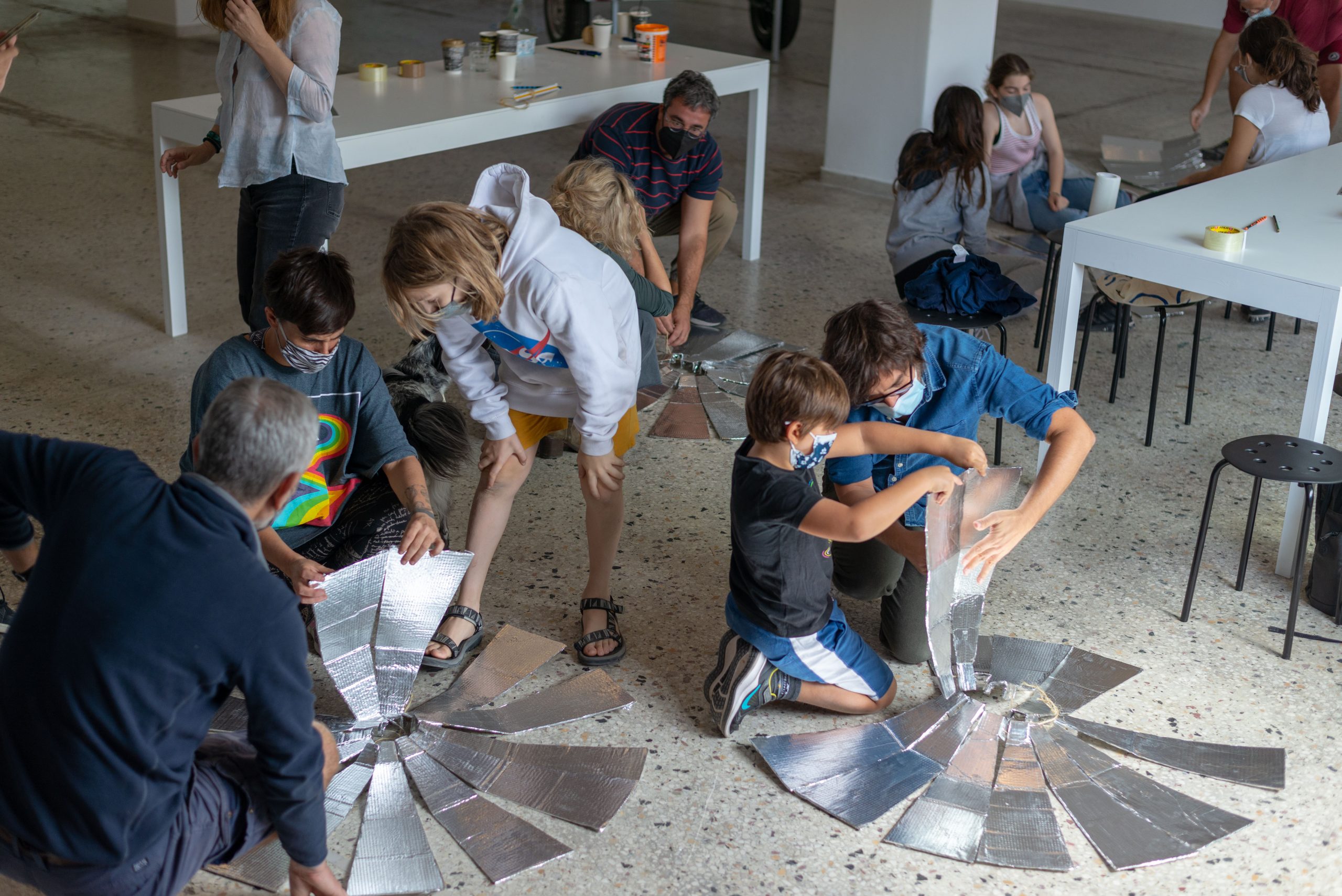
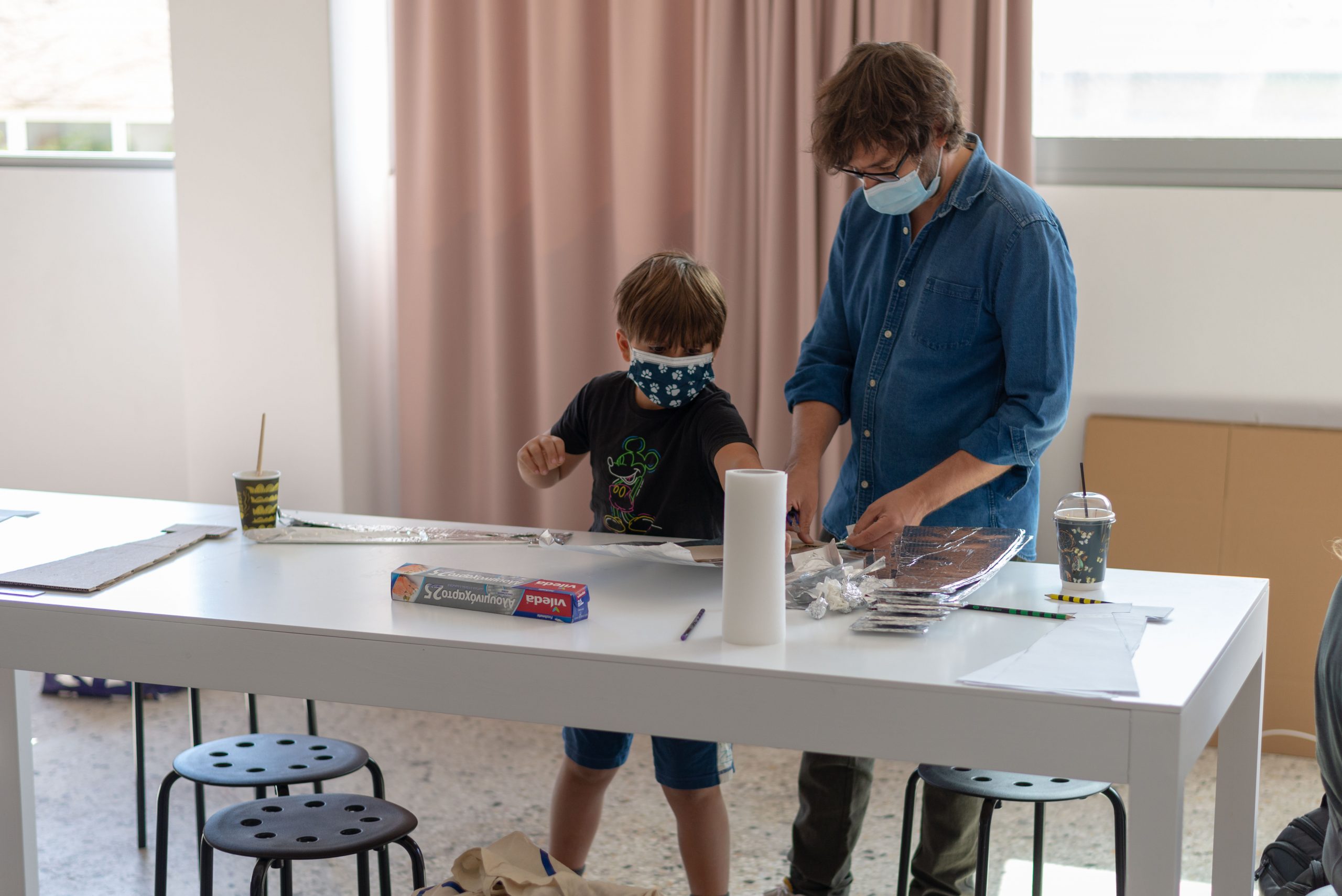
This workshop will provide its participants with the basic knowledge and skills needed to create a small parabolic solar cooker, it will also present and suggest other easily replicated off-grid designs that can have applications within the urban architecture.
The workshop aims to motivate the city’s inhabitants to re-claim their territory and the energy it receives and sends back in their environment. It will further introduce with future applicable solutions to individually manage an energy cycle within the homestead that are being researched now.
Introduction
We will be introduced to examples of DIY off-grid designs and learn about novel lab research that will possibly be able to create energy cycles within future sustainable and biodiverse homes. We are going to learn about the history of solar cooking and the world wide solar cooker community where designs and examples can be shared and improved, as well as the basic physics of how different solar cooker designs concentrate solar energy in order for us to use it as heat for cooking or sterilising water. Also, an introduction will take place on the basic types of solar cookers mainly the box solar oven and the parabolic solar cooker as well as ways to turn common objects into solar cookers/ baskets/ umbrellas/ satellite dishes. Different designs have different benefits and can accommodate for a variety of situations/spaces and numbers of people, the ideal shape to replicate in a workshop is the parabolic solar cooker, which was used by the artists for the transportable community solar cooker Biosentinel.
Design and construction
We will design and construct a small solar cooker (in teams of 2-3) , using thick cardboard, common aluminum foil, and light type wood. The reflector panels will be cut out by the participants using provided patterns and dressed with the highly reflective material of aluminium foil using water based glue.
Assembly and Stand Construction
Assembly of reflector panels using tape and string and construction of stand using wood and metal wire.
Baking
Practice run baking a small loaf of bread to familiarise with using the oven using black cake baking trays.
Saturday, 9 October 2021, 12:00 – 15:00 | Workshop
Before Nature – art, ecology and social change
Fascilitator: David Prieto Serrano (INLAND)
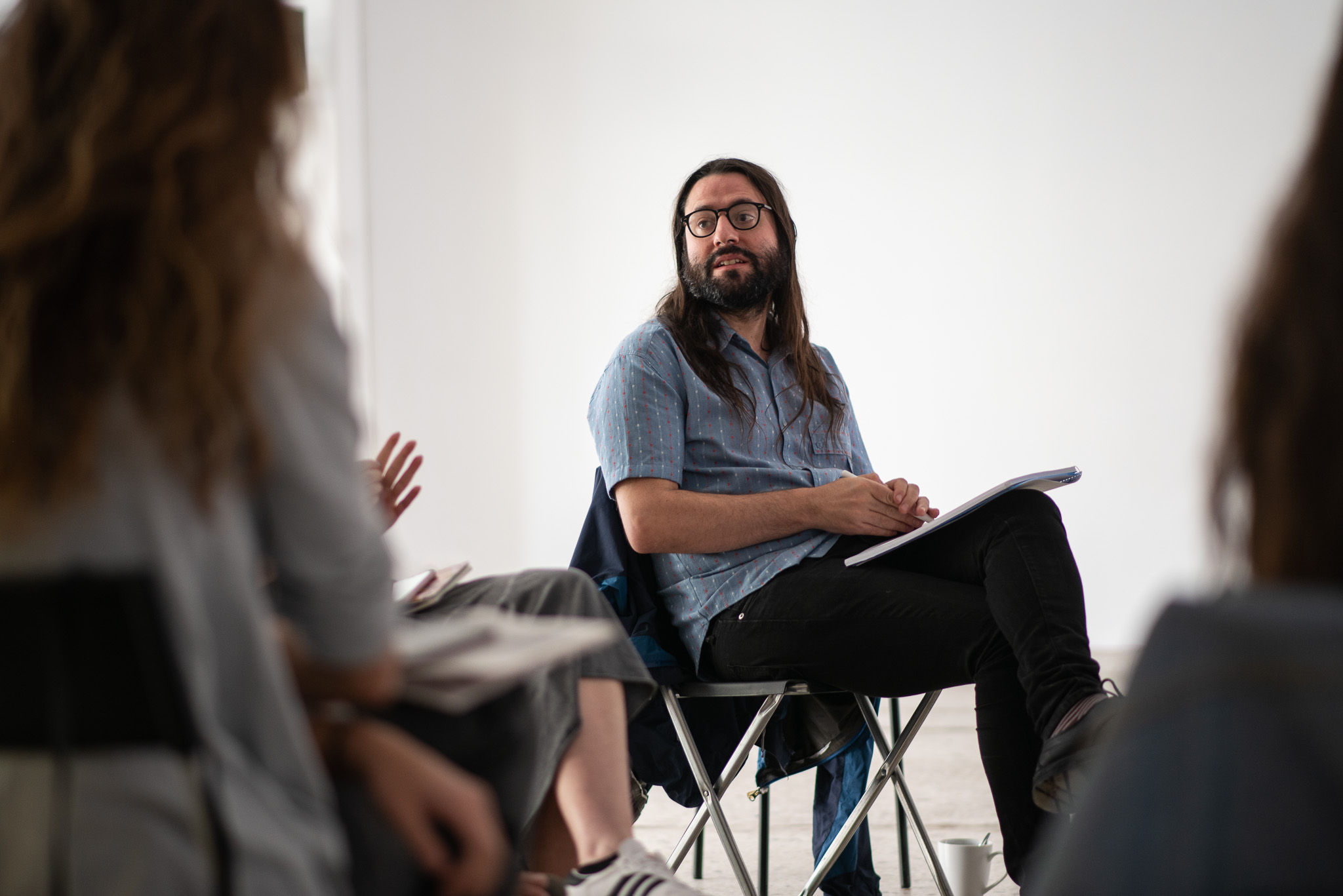
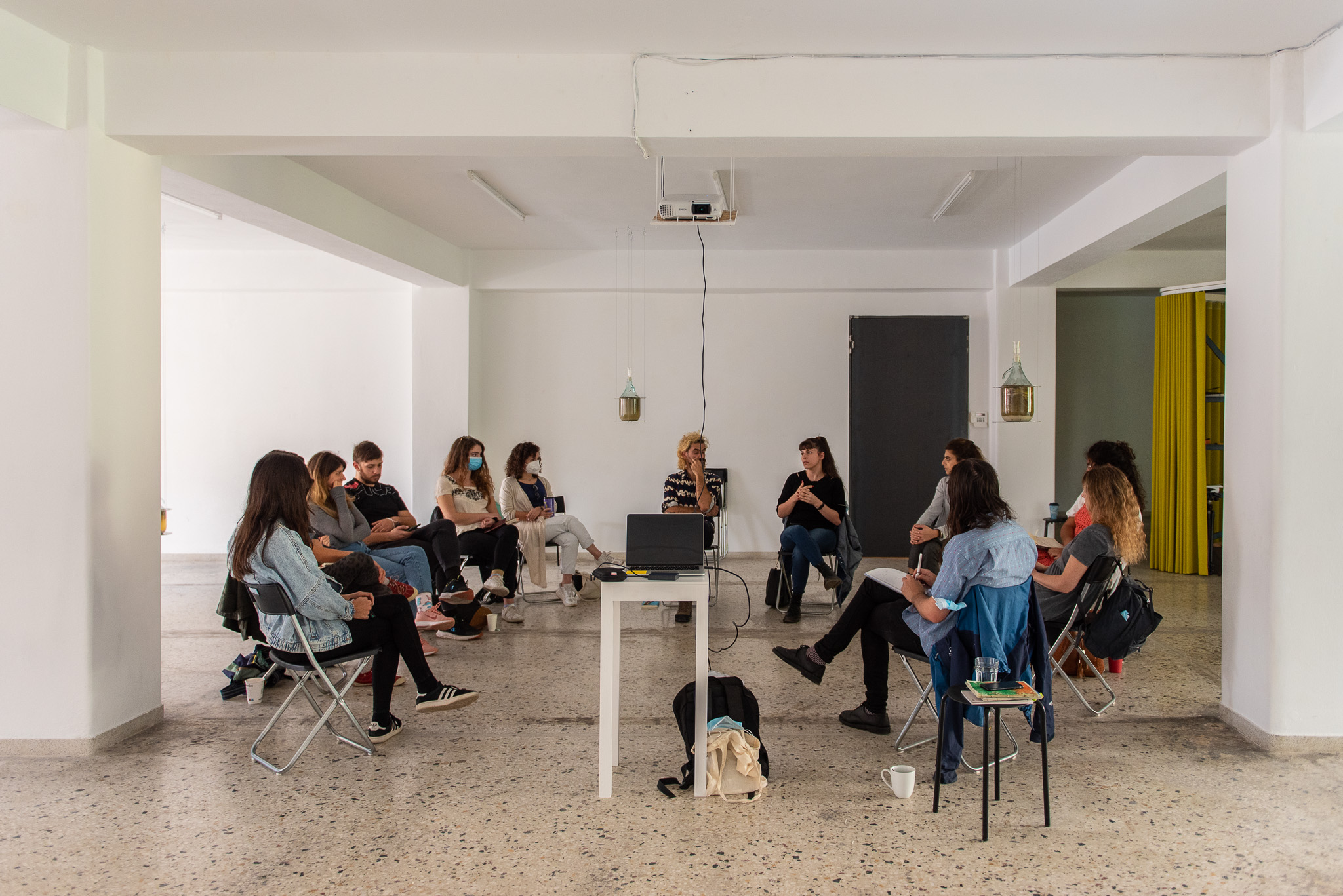
A short lecture about three inland experiences: i. school of shepherds, ii. new curriculum: art, agroecology and vernacular knowledge, iii. a gathering on the future and resistance of the shepherds. Presenting some theoretical key concepts (usership, domesticity…) and presenting at the end some concrete cases in which different sensibilities on nature, ecology and rural worlds can become disruptive. Also, a discussion will take place gathering different experiences and positions of the workshop participants, to conclude presenting the myriad of ideas and positions, and how art can contribute to understand and overcome contemporary challenges as climate crisis.
INLAND is an arts collective, dedicated to agricultural, social and cultural production, and a collaborative agency. It confronts various problems of a system that is collapsing at its environmental, economic and cultural level. Inland’s value lies in the applicability of its method. It promotes cells in specific rural locations – some of which remain undisclosed – whilst operating at a supranational level, setting up agencies in different countries to affect agrarian and cultural policy frameworks in Europe.
Within the era of a global ecosocial crisis, developing new rural imaginaries and practices becomes an urgent need to rethink our relationship with nature, addressing domesticity and land-based food systems as a key element to rethink from our urban-centric post-industrial society. This workshop is focused on a specific experience in the mountains of northern Spain, by which we will approach the transformative potential in a particular form of relationality: art-pastoralism-territory. After presenting some concrete INLAND experiences around the School of Shepherds, we will open a discussion within participants, trying to think about the paradoxes, frictions and convergences in our ecological self-understanding.
Support
Co-funded by the Creative Europe Programme of the European Union, as part of the project The Table and the Territory.